Update – AACR and Compusystems Makes it Right

Update on previous post: Hubby replied to Dave’s email. He’s awesome, is (once again) Captain of Team D Beats C, and I hope he writes about his experiences as a caregiver and spouse of someone living with cancer someday. I also called AACR and spoke to Josh, a very nice and caring human being who agreed that the response I first received was not appropriate or kind. He asked that I forward my correspondence to him so that he could look into it.

He also expressed heartfelt wishes for me as I deal with another round of breast cancer.

Later, I received a call from Sheraine, Customer Service Team Lead from Compusystems. She offered an apology and heartfelt wishes for a speedy recovery. She assured me that there are scripted responses that are available and appropriate for cases of illness and they would make sure those responses are used in the future.

A little kindness goes a long way. I’m pleased with the outcome.

Nice Going, AACR (Salt on the Wound)

I didn’t plan on writing two blog posts in one day, but here we are. Because of my second diagnosis with breast cancer, I have to adjust my life and schedule to accommodate surgery, reconstruction, and other treatments. I had planned to attend the annual American Association for Cancer Research Annual Meeting in April so I could present my research on molecular regulation of breast cancer bone metastasis, network with colleagues, patients, survivors, and policy makers, and learn about the latest advances in the field.

Cancer has robbed me of that opportunity.

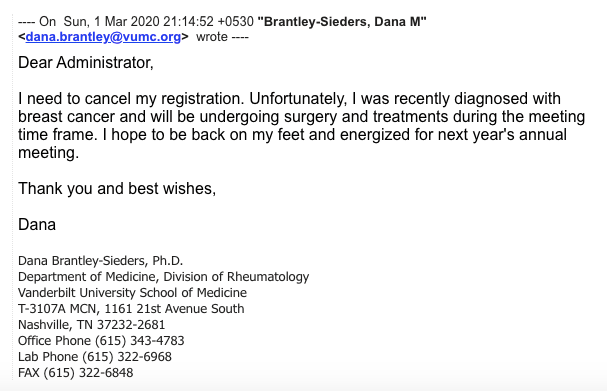
Since I’d already registered, I contacted AACR to let them know what was going on and to cancel my registration. Here’s what I wrote:

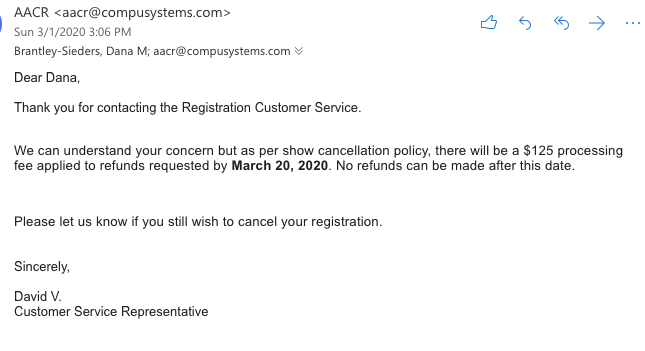
Short, sweet, to the point. I didn’t expect a reply until next week, but, to my surprise (and based on the tone of the reply, horror), I received a reply within a few hours:

So, after writing the American Association for CANCER Research to let them know that I cannot attend the meeting because I have CANCER, that’s the stone cold, insensitive, shitty reply I received. I could’ve let it slide, but, as I note in my response, I’m soooooooo done with bullshit at this point.

Here’s my reply (copied and pasted since it’s too long for a screenshot):

Dear David,


Wow. Just wow.


Two years ago, I would have just let this slide, been “nice” and “quiet” without causing trouble, like all women are taught to do. But two years ago, I was diagnosed with breast cancer. And, as of last week, my breast cancer is back. As such, I have neither the time nor the energy for bovine fecal material. That the current bovine fecal material is coming from the American Association for Cancer Research, an organization I’ve supported since my days as a graduate student (member 1998-present), just after a second diagnosis with breast cancer, makes it all the more horrible.


As I noted in my request, I have cancer. I will likely be undergoing surgery for the third time during the annual conference, which means cancer has cheated me of the opportunity to present my own research findings on breast cancer metastasis to my peers. Cancer will also steal time from my research, my family, my friends, and my life. 
So, in response to, “Please let us know if you still wish to cancel your registration,” um, yeah. Did you think I’d suddenly change my mind, or that my cancer would suddenly be all better so I can totally go to the meeting – my bad? What kind of stupid, insensitive question is that? Seriously, I have people who despise me who wouldn’t be that stone cold. Do you need proof of my diagnosis? I have CDs full of scans from my six biopsies and two lumpectomies. Do I need a doctor’s note? You can check out my blog where I’ve been documenting my story in an effort to let patients going through the same struggles that (a) they’re not alone, (b) knowledge is power so here are accessible data you can use to make informed healthcare decisions, and (c) to be a liaison between research and patients/survivors so the public understands how important our work is and so they’ll engage to help us better meet their needs. www.talkingtatas.com.

You’d best believe I’ll be blogging about the AACR responding to the news that I have cancer and cannot attend the annual meeting with it’ll cost you $125. No “I’m so sorry for what you’re going through.” No, “What can the AACR do to support you during this difficult time.” Just, “We can understand your concern.”


You can understand my concern, you say. With all due respect, no, unless you’ve had cancer, you absolutely, positively cannot understand even a fraction of my concerns. Unless you’ve been hit by the sledgehammer of shock upon hearing those three horrible words, you have cancer, unless you’ve had to tell your spouse, your children, and your mother that you’ve been diagnosed with a deadly disease, unless you’ve endured the pain of surgery and recovery, the burns and fatigue induced by radiation, the indignity of estrogen suppression therapies that forever change you and your relationship to your body, unless you’ve endured sleepless nights wondering if you’ll live for another 5 years, 10 years, 15 years, and if/when cancer might come back and kill you, you have NO IDEA about my concerns. That’s completely insensitive, condescending, and wrong on so many levels.


But please, by all means, take the $125. You certainly need it more than I do. I don’t need to think about insurance deductibles, medication, bills to support myself and my family. 

And one last thing – you don’t get to call me “Dana” in a response like the one you offered. It’s Dr. Brantley-Sieders to you.

A little consideration, human decency, and kindness can go a long way. Coldness, disregard, and insensitivity can, too. Badly done, AACR. Badly done.

Photo credit

Advocacy 101 – What I Learned from Training

I learned so many new things today at Patient Advocacy Orientation! My best days are when I’m learning new things. It’s one of the things I love best about being a scientist, and it’s a great foundation upon which to build for my new work as a Patient Advocate.

What exactly are advocates and what do they do? In terms of Research Advocacy Programs, advocates are disease survivors (cancer survivors in my case), caregivers, and members of the community who provide the patient perspective to researchers to help shape the nature and direction of cancer research and patient care. Their role is critical, as they serve as a voice for patients, helping investigators tailor their research with patients concerns in mind – not just in terms of outcomes and sound science, but also in terms patient comfort, respect for patient rights and dignity, and beneficence. This means making sure the goals of research are focused on and aligned with serving patient needs and improving outcomes and quality of life.

This seems pretty intuitive, and I believe most investigators are truly committed and passionate about doing research that will make a difference, be it developing new treatments, better diagnostic tools, reducing side effects of existing treatments, and improving survival and quality of life for patients. I certainly was and am. But most investigators don’t experience what patients do – except in cases like mine where researchers become patients and survivors. My experience certainly changed my perspective, which is why I want to share what I’ve learned with both the research and survivor communities.

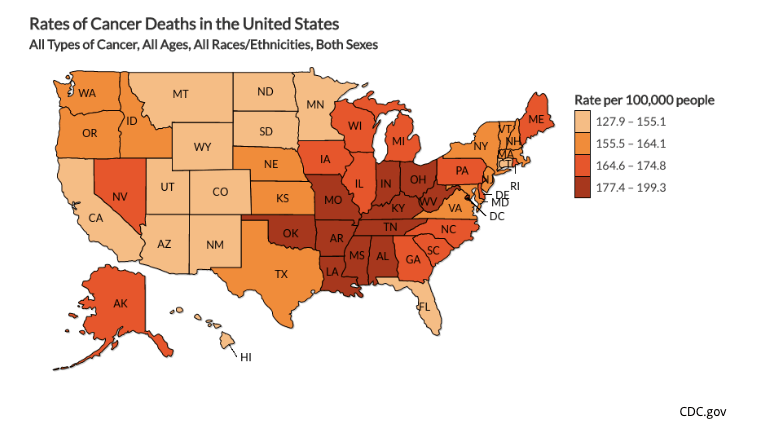
That mission became more urgent for me today in the face of some jarring statistics. Tennessee and the surrounding regions have some of the highest cancer death rates in the United States.

Link to source.

Comparing the map above to the map below that shows new cancer cases diagnosed by state, incidence, the frequency with which cancer occurs, doesn’t fully explain higher death rates.

Link to source.

My heart sank when I saw these data, and really drove home my privilege. I am well-educated, have a high socioeconomic status, have access to insurance coverage and some of the best health care available in the United States, and I have inside information based on my work as a breast cancer researcher.

I’m lucky. Far too many of my fellow Tennesseans and Southerners are not. My Institution and Affiliated Cancer Center serve this region. I want to be a part of better serving patients in this region, which will be a HUGE focus of my advocacy work.

What will this work involve? One of the ways I think I can be of use is by helping recruit patients for clinical trials. According to what I learned today, many promising new drugs do not make it through Phase III clinical trial testing* due to failure to accrue enough patients to sufficiently test their effectiveness. That’s such a shame and missed opportunity. Of course, there are many barriers for patient participation in clinical trials – fear/lack of understanding; lack of access due to barriers to travel/transportation, unmet childcare needs, inability to take time off work, etc.; disparities that make minority populations reluctant to participate**. While I am not in a position to combat access to trials, I am in a position to serve as a liaison between patients and clinical researchers accruing patients for trials. I can help educate potential trial participants in the process, assure them of their rights (including the ability to stop participating at any time), alleviate fears through helping patients understand the benefits and how they might be helping a great number of future cancer patients. I am also working with African American advocates and other advocates of color to understand and be sensitive to those communities, their histories, and their needs.

Those needs are great, particularly in terms of breast cancer outcomes. African American women diagnosed with breast cancer have lower overall survival rates compared to white women. Finding out why is crucial for closing the gap. Increasing African American participation in clinical trials is a key part of that process.

Link to source.

For more on cancer disparities across ethnic groups, click here.

Bottom line: I’ve got work to do, and I’m excited to work with my fellow survivors to help patients now and in the future. Interested in becoming an advocate? Here are some resources that can help! My Institution’s Advocacy Resources, How Patient Advocates Help Cancer Research: Expert Q&A, Why Patient Advocacy is Vital.

*I’ll cover clinical trials in more detail in a future post. Click here to learn more now. Phase III trials test drugs that have already been proven safe and promising in terms of effectiveness.

**African Americans remember the horrific abuses perpetrated by scientific investigators, including those in charge of Tuskegee Study of Syphilis – which resulted in hundreds of African Americans being denied treatment in order to study the long term effects of untreated syphilis

Science Break! Outreach – Getting High School Students Excited About Cancer Research!

Last week, I had the opportunity to speak with students in Freshman Biology classes at Overton High School here in Nashville. I’d given science demonstrations before—including fun with dry ice and a mouse organ scavenger hunt/anatomy lesson that was fun for everyone except one squeamish student. But I’d never spoken in detail about cancer biology and cancer research.

I’ve been saying (read: complaining) for YEARS about how scientists are terrible about speaking with the public. We talk to each other all the time at our institutions and at scientific conferences, but not enough of us reach out to our communities, and that’s a shame. First of all, we as scientists should be advocates for the scientific process and for the progress we’re making. Second, scientists are in a position to combat scammers, pseudoscience, and mis/disinformation by sharing our knowledge. Third, most of us are funded, at least in part, by the federal government. I’m funded by The National Institutes of Health (NIH) through The National Cancer Institute (NCI) – those agencies are funded by federal tax dollars. Since I’m paid by tax dollars, I personally feel an obligation to be able to explain what I do and why it is important to taxpayers in terms they can understand.

So, in my new role as a cancer researcher who has also survived cancer, I’m putting my time and effort where my big fat mouth is and getting out there to be an ambassador and advocate for cancer research! I occurred to me that the slides from my recent presentation for high school students would make a great addition to this blog. It covers how normal cells transform into malignant tumor cells at the molecular level.

The goal of this presentation is to provide a brief overview of how damage to DNA, the genetic code that is used to build proteins (the workhorses of a cell) can lead to uncontrolled cell growth and survival – both hallmarks of cancer. Damage to DNA and failure to properly repair that damage can lead to mutation (change in the code), amplification (more copies of a gene than normal), deletion (loss of DNA and the genes encoded). When changes in DNA occur in genes that regulate cell division, this can contribute to cancer. Uncontrolled cell growth is fundamental to cancer.

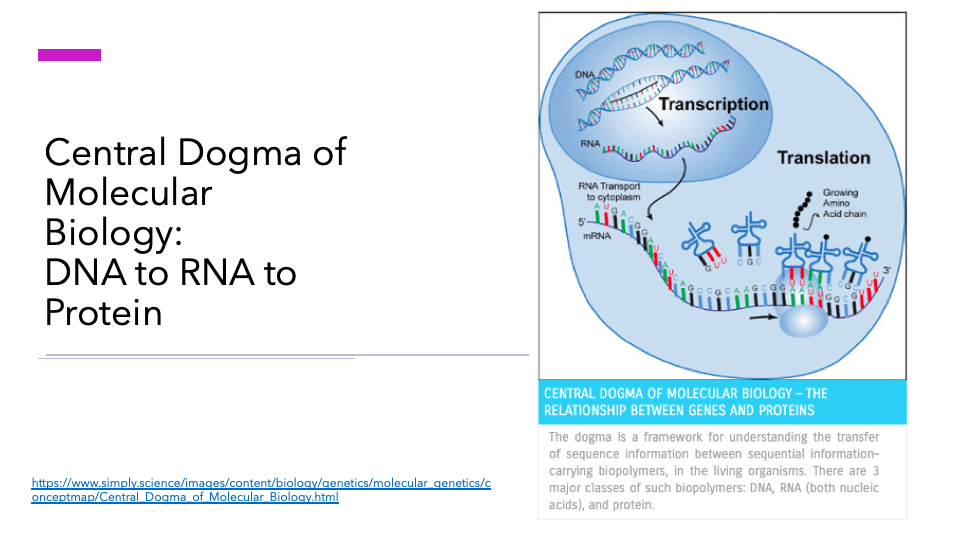
To understand how DNA damage leads to cancer, we first have to review what DNA actually does – The Central Dogma of Molecular Biology. I covered this in a previous post, but I’ll go over it again for the (vast majority of) people who don’t spend their days thinking about and doing molecular and cellular biology research. The more frequently you see information, the more likely you’ll be to remember it.

DNA is the blueprint that contains instructions for how to build every protein a cell needs for its normal function. Since, as we’ll see in the next few slides, DNA damage can cause huge problems for cells, DNA is protected in an organelle within the cell called the nucleus. It is only unwound from its double helix structure during (1) DNA replication when the cell makes extra copies before dividing, and (2) when tiny portions, genes, are transcribed (copied) into small units called RNA. RNA gets transported out of the nucleus where the code is translated to make proteins. Each sequence of three base pairs encodes a specific amino acid (building blocks of protein). Take home = DNA to RNA to protein. And DNA damage leads to problems with the proteins they encode.

So what do proteins do? The answer is pretty much everything a cell needs to function. Two specific classes of proteins, those involved in regulation and signaling, are the targets of mutations/amplifications/deletions that can lead to cancer. Regulation involves turning cellular processes, like cell division, on and off. Signaling involves proteins transmitting messages from outside the cell to the inside — including messages that tell the cell when to divide.

DNA can be damaged or altered by internal factors and external factors. Errors occur in replication (copying during cell division), and if they aren’t repaired properly, they can lead to mutations. Other things that can damage DNA include ultraviolet light (sunlight – skin cancer), chemicals (carcinogens) in cigarette smoke, and exposure to radiation. Base mismatches can lead to a change in the code. Single-stranded and double-stranded breaks can lead to amplification or deletion of essential genes in the cell division process. Damage to DNA in genes that encode DNA damage repair proteins are especially harmful, as failed repair leads to more mutations, amplifications, and deletions that accumulate and lead to cancer.

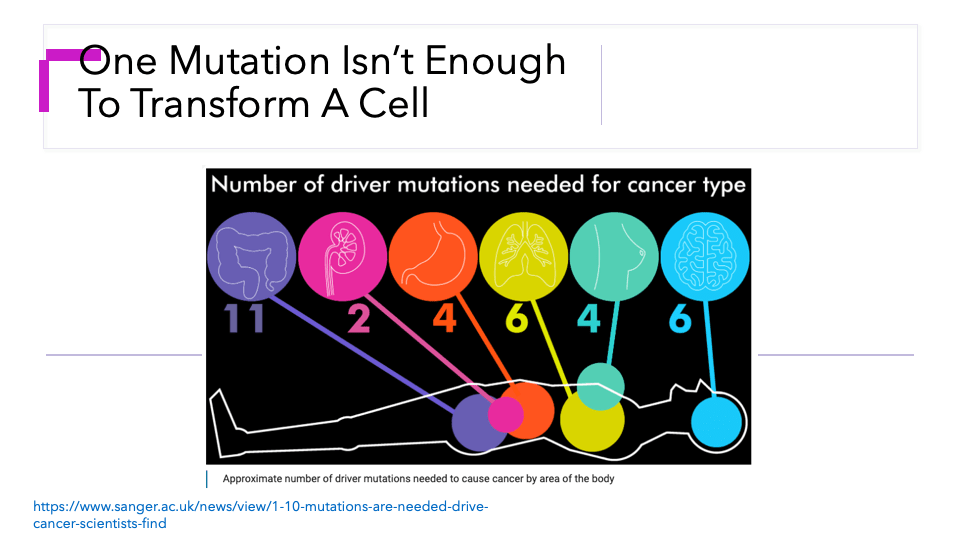
Mutations and DNA damage occur relatively infrequently. Most mutations are silent, meaning that they don’t affect the production or function of the protein the gene encodes, and it takes more than one mutation to transform a cell and make it cancerous.

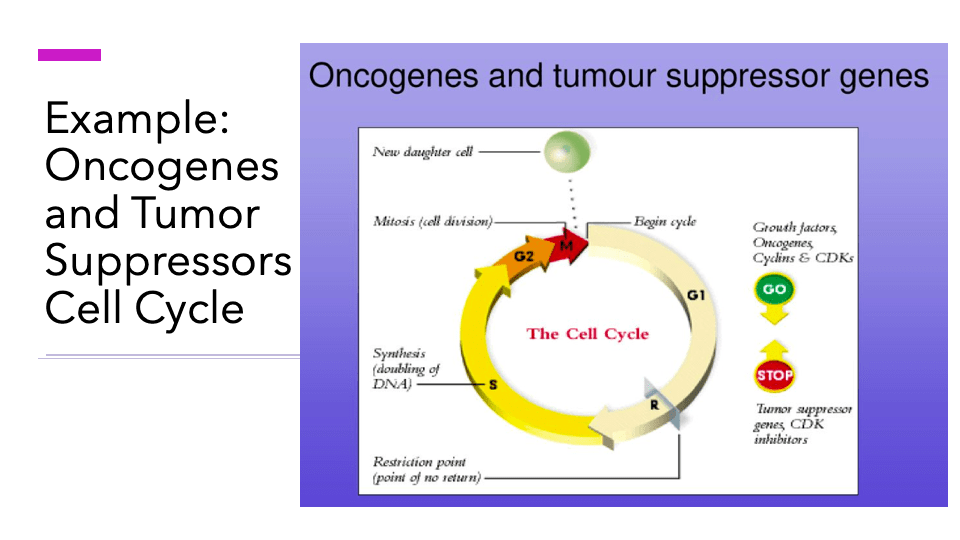
The types of genes that drive cancer include oncogenes and tumor suppressors. In the cell division process, there are many on/off switches that tell the cell when to divide and when to stop the process of division. Oncogenes, which are amplified (more copies of the gene than normal made after DNA damage) or mutated to be super active, are the “go” signals, like a car’s accelerator. Tumor suppressors, which are deleted (genes are lost after DNA damage) or mutated to be non functional, are the “stop” signals, like a car’s brakes. A combination of amplified/mutated oncogenes plus deleted/mutated tumor suppressors transform a normal cell into a cancer cell that then divides uncontrollably, like a speeding car with the brake lines cut.

On/off switches in the cell cycle, the series of steps that a cell follows to divide and make two cells, have the potential to become oncogenes and tumor suppressors.

This slide shows an example of an oncogene and tumor suppressor in a signaling pathway that contributes to breast cancer. Cyclin-dependent kinases (CDK) are enzymes that tag other proteins with phosphates (P) groups, which serves as a signal for the tagged protein to perform its function. In the case of CDK4/6, its substrate RB (off switch for cell cycles) is tagged with phosphate, which marks it for destruction by the cell. When RB is destroyed, it releases its buddy E2F, freeing it to help the cell make more proteins required for cell division. CDK2/4 function is activated (on switch for cell cycle) by binding to its buddy cyclin D1, and is deactivated by its inhibitor p16. The gene encoding cyclin D1 is commonly amplified (more copies) in breast cancer, and the gene encoding RB is commonly mutated or deleted (gene lost or mutated to make a non functioning protein). Thus, cyclin D1 is an oncogene, and RB is a tumor suppressor.

That’s the overview, but this time I include specific examples. There are many other oncogene drivers and tumor suppressors that contribute to breast cancer and other cancers. I’ll cover some of those in future posts. Hope y’all enjoyed this Science Break! Shout out to Dr. Shannon Youngman and the students from Overton for hosting me and asking some great questions!

Sex After Breast Cancer – What You Can Do to Get Your Groove Back

This is the first in a series of posts about sex, sexual dysfunction, and available treatment options for breast cancer survivors. Before we get started, disclaimer: I am NOT a medical doctor. I’m speaking as a scientist and a survivor. I encourage all breast cancer survivors to have frank discussions with their oncologists and other physicians on their care teams about sexual dysfunction that often results from surgery, chemotherapy, radiation, estrogen suppression and other therapies.

First thing’s first – do not let ANYONE tell you that you shouldn’t complain about sexual dysfunction because (a) you should just be grateful to be alive, (b) you’re too old to be thinking about sex, (c) it’s just something women have to deal with because of the mystery and complexity of women’s bodies or some other fucking bullshit. You DESERVE to experience sexual pleasure and satisfaction. You have every right to SEEK treatments.

Seriously, there are at least 4-6 boner pills on the market, and no one’s busting old men’s balls about using them. And insurance covers them. Spoiler alert – insurance doesn’t cover most of what’s available for women. #fuckthepatriarchy

So, what causes sexual dysfunction? Well, for starters, getting your boobs CUT ON OR CUT OFF has a MAJOR impact on body image and sexual function. With a total mastectomy*, most women lose their nipples as well as sensation in the area of reconstruction. Now, for me, nipple sensation is a pretty big deal for sexual gratification. I was lucky enough to be a candidate for oncoplastic surgery – which is a fancy way of saying I was able to have a large lumpectomy followed by breast reduction and a lift. Even though I was lucky enough to have breast conserving surgery, my nipple sensation isn’t the same. I mean, my surgeon (who is wonderful and this is not meant to disparage him in any way) cut around my nipples in the process of moving them higher on my breasts after removing excess skin and lifting. Sometimes, I get weird tingling sensations akin to electric shocks in my nipples, and the psychological effects of surgery definitely affected my desire to have them touched and stroked. I have a FANTASTIC husband who helped me find my new normal in the bedroom, but it was and still sometimes is a struggle.

First best advice – get to know your new body on your own. Explore the terrain, find out what feels good and what doesn’t. There’s an adjustment period, and you won’t be the same, but you CAN find pleasure again.

In addition to surgery, breast cancer treatments like chemotherapy, radiation, estrogen blockers, and other drugs can wreak havoc on your body, your sexual desire and responses, and your ability to achieve orgasm. In my case, thanks to medically-induced menopause, I’ve experienced vaginal dryness and problems climaxing. My spirit and body are willing for the most part, but it’s a LOT harder to get there. Fortunately, I’m not shy and asked my medical oncologist what could be done, and even better, I found out that there are actually options available to help. Not enough. We need more research, but there are treatments available. I’ll talk about a few of them in this post and will cover more as I learn about them and try them.

**.Vaginal lubrication and hydration – chemotherapy (which can push women into menopause) and medically induced menopause/estrogen suppression therapy can make your vajazzle as dry as the Sahara, which is uncomfortable in general and during sex in particular. Replens vaginal moisturizer is commonly recommended, and it’s helped me personally. Another product I’ve tried is Revaree, a vaginal moisturizer that contains hyaluronic acid, which attracts and retains moisture. I’m on the fence about which I like best, but both have helped, and they have the benefit of being hormone-free. However, be aware that Revaree, unlike Replens, is not compatible with condoms. Aside from moisture and hydration, lube is your best bedroom friend!

**Arousal and climax – I was pleasantly surprised to learn that there are more options than I anticipated. One that I tried recently is Vyleesi, a treatment for hypoactive (low) sexual desire disorder (HSDD). It’s injectable, so if you’re squeamish about needles, take that into consideration. On the other hand, it’s like an Epipen in that it’s preloaded and injection is as easy as a push and a click. One of the side effects is nausea, which I did experience, but it’s reported to go away over time. I’ll report back on that. What I CAN report is that it worked well for me in terms of achieving orgasm! One trial so far, but I’ll repeat the experiment for sure. Something that I haven’t yet tried but plan to test out are topical treatments, including “scream cream.” There are various formulations that can include hormones or be hormone-free. The hormone-free varieties often include active ingredients like sildenafil (active ingredient in Viagra), and other vasodilators, which stimulate blood flow by relaxing the vascular smooth muscles. These treatments do require a prescription and can be ordered from online pharmacies.

Toys and aids – vibrators are AMAZING! There are so many varieties to choose from, and they’re super fun to use and add to your bedroom game. I used a couple before cancer, and they are staples for me post breast cancer. Some of my favorites include the Dame Fin, Butterfly Kiss, and Rabbit styles. Don’t want to visit a sex shop? You can find EVERYTHING online, including sex toys, and have them delivered discreetly right to your door. Again, test them out and explore on your own as you get to know and accept your new body. Find out what works for you, and definitely get your partner involved in the fun. Pros include price and safety. You don’t have to spend a fortune, and you don’t need hormones or other drugs to enjoy toys – just don’t go…too big too fast.

**Laser Therapy – Not going to lie – hearing the word “laser” as a treatment for vaginas, as in OMFG you’re going to LAZE my vajayjay??!! scared the crap out of me. But, being a rational person, I listened with an open mind and am now considering this treatment. And, treatments like this offer hope for women suffering from vaginal atrophy. MonaLisa Touch is one laser treatment option that stimulates collagen production for tissue regeneration. Aside from the whole laser to the vagina thing, cons include expense. And (not surprisingly, but still infuriating) insurance doesn’t cover the procedure.

State of mind – A healthy body and mind are key for great sex. Aside from the usual stuff – eat right, drink plenty of water, exercise – mindfulness and meditation are great tools for stress relief and relaxation, which is key to satisfying sex and reaching climax. They’ve helped me in and out of the bedroom. Know what else has helped? Romance novels! Now, I’m totally biased because I write romance as my side hustle, but I was an avid reader LONG before that. A great love story can be just the thing to spark desire and fantasy. The mind is truly the most powerful sex organ. One of my go-to sites for romance recommendations, Smart Bitches Trashy Books, covers romance novels featuring cancer survivor characters and recommendations for cancer survivors!

This is the short list and the beginning of my coverage of this topic. I hope it becomes a conversation. Feel free to comment or message me. Share your experiences, tell me (and my growing group of followers) what works for you, what doesn’t, and how you go about broaching the subject with your doctor, your partner, or other professionals. Knowledge is power, and knowing you aren’t alone out there is powerful and healing, too!

*Nipple-sparing mastectomies are a thing and definitely worth asking your breast surgeon about.

**Most of this information comes from the Women’s Institute for Sexual Health (WISH) in Nashville, a FANTASTIC resource for women experiencing sexual dysfunction.
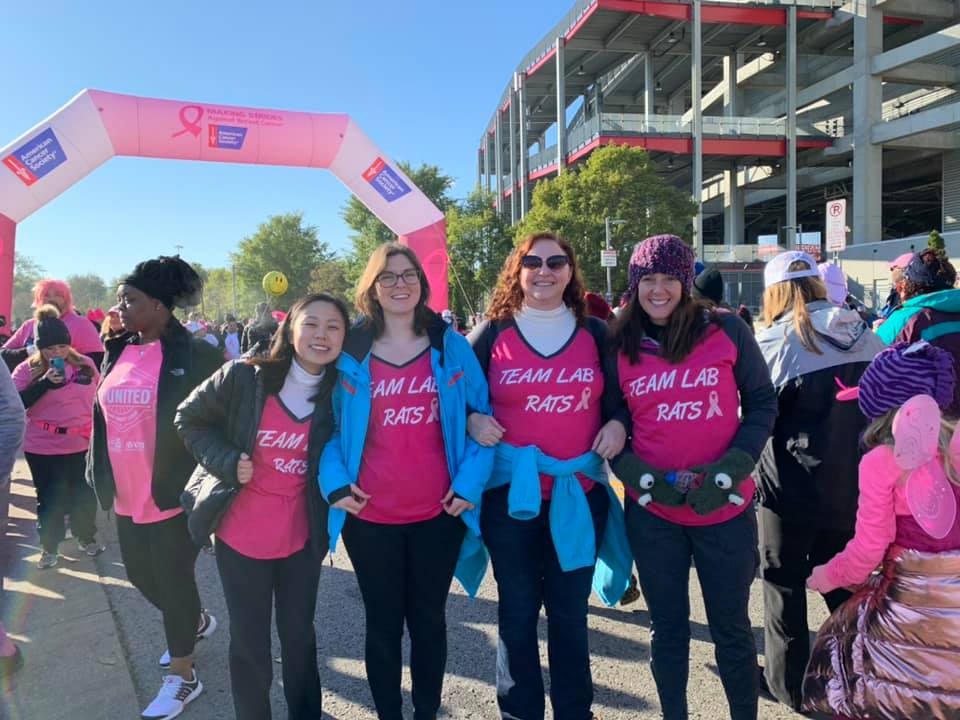
Team Lab Rats at Nashville Making Strides Against Breast Cancer Event

Laura Kim, Kalin Wilson, Dana Brantley-Sieders, Rebecca Cook – Team Lab Rats!

Days like today fill me with so much energy, enthusiasm, and hope.

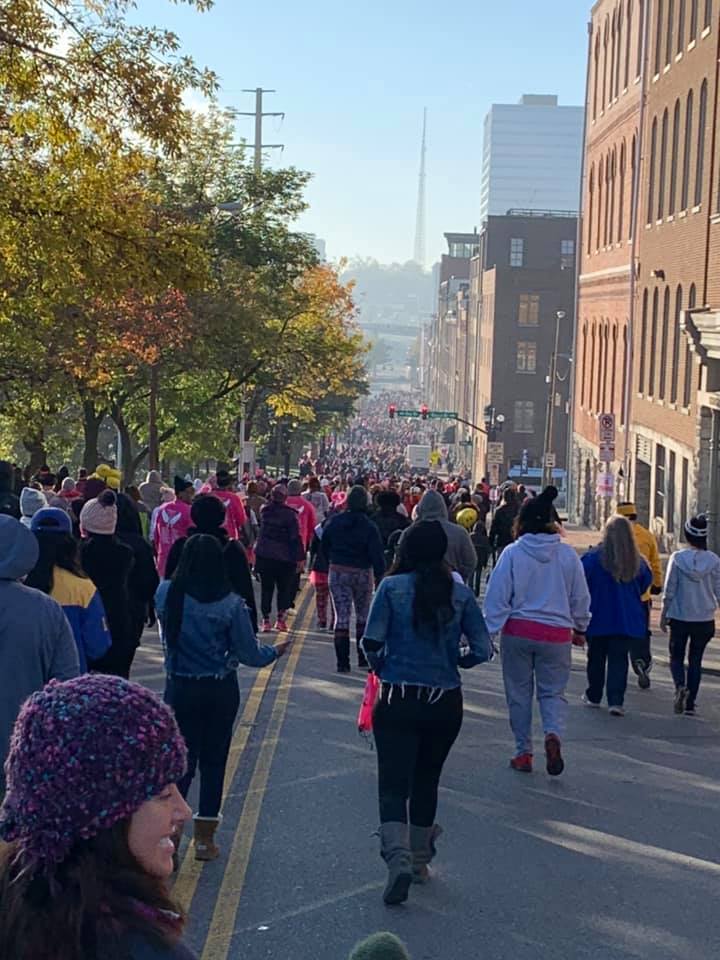
Nissan Stadium and the surrounding area were JAM PACKED with people – women, men, kiddos, cute doggos, survivors and those who love and honor them – gathered together in a unified purpose: to raise awareness and money for breast cancer research, patient assistance, and to keep making strides!

My wonderful friends/colleagues, including graduate student Laura Kim, medical student Kalin Wilson, and fellow investigator and collaborator Rebecca Cook, joined me to form Team Lab Rats. They were with me through my own adventure with breast cancer and are with me in the laboratory as we search for new and better treatments for molecular targets that drive breast cancer growth, survival, and metastatic progression. It’s a beautiful thing. I’m a lucky woman.

Together, we raised $1,500, and I couldn’t be prouder of these amazing women and all of the teams who raised hundreds of thousands of dollars for this cause that is so near and dear to my heart. Nashville, my home city, you make me so proud!

Look at that crowd!
My AMAZING Team honored me at the Avon booth by Kissing Breast Cancer Goodbye!

To everyone in Nashville and around the United States (and the world), thank you for your support. It means more than you know to survivors. Thank you.

Making Strides Against Breast Cancer

UPDATETeam Lab Rats raised $1,500 for Making Strides! Thank you to everyone who donated, bought my books in October, and for everyone who supported and shared fundraiser deets! I’ll be posting pictures from the event this weekend!

Me The Day Before My Breast Cancer Surgery

I’m thrilled to be a part of the 2019 Making Strides Against Breast Cancer Initiative, sponsored by The American Cancer Society and Avon. American Cancer Society is a great organization, supporting researchers, patients, survivors, and clinicians. I’ve had the great fortune to serve as a peer reviewer for their research grants program, and I’ve got to tell you – there are some AMAZING new investigators across the United States working hard every day to find new treatments, better diagnostics, better interventions, and extending our knowledge of this complex and terrifying collection of diseases.

In addition to research, they fund patient transport to and from treatments, personal assistance to help patients understand their diagnosis and get the help they need, and one-on-one support for breast cancer patients. This is a fantastic organization that I’m proud to support as a researcher, advocate, and survivor.

I’m Team Leader for Team Lab Rats, and we’ve raised over $1,000 so far and growing! I’m also donating 100% of my October book royalties to this Making Strides Fundraiser. Pictures and updates to follow.

If you or someone you love has been diagnosed with cancer, reach out to The American Cancer Society for accurate information, resources, and support. Knowledge is power. You are not alone.

Introduction

I love you with all my boobs. I would say my heart, but my boobs are bigger

Dr. Dana Brantley-Sieders, Ph.D. (photo credit Lillian Boeskool)

I’ve spent twenty years working as a biomedical breast cancer researcher. Then, I was diagnosed with breast cancer. I thought I knew breast cancer before it whacked me upside my left boob and left me bleeding on the curb of uncertainty. I thought I knew cancer. I had a lot to learn. The purpose of this blog is to share my personal adventure with breast cancer, from the laboratory bench to my own bedside, and to provide accessible information about breast cancer biology for non-scientists. I say adventure, because I’d rather think of it as action movie with some really cool side quests instead of another tragedy-to-triumph saga. I’m not big on sagas. I am big on kickass intellectual badassery, pathological nerdiness, and talking about my sweet, sweet rack.

I’ll be posting about breast structure and function, how breast cancers arise from normal breast tissues. Notice I wrote “cancers” instead of “cancer.” Breast cancers are a actually a collection of diseases, and all breast cancers are different. To date, there are at least 5 subtypes, and subtypes within those subtypes.

It’s complicated, which is one reason why we haven’t cured these diseases. Another reason is how tricky and adaptable cancers are by their very nature. We’ll get into all of that in a few posts. In the meantime, let me get into the other purpose of this blog: fighting pseudoscience and scams with peer-reviewed, vetted science.

We live in an age of fake news and pseudoscience, made worse by the pervasive anti-intellectual and anti-science political culture gripping the United States and much of the world. The Internet and social media are plagued by scammers selling “alternative medicine” and woo woo “cures” for cancer. Through TALKING TATAS, I offer accurate, evidence-based science that is accessible to laypersons, including the more than three hundred thousand individuals diagnosed with breast cancer every year*, their caregivers, and their loved ones. Submit questions, ask for follow-up on any and all posts, be a part of the discussion. Knowledge is power, and it can save lives!

Welcome! I’m glad you’re here!