And The Bottom Drops Out…

It’s been one of those days.

Last week, I had my 6th biopsy. I actually blogged (read: bitched) about it in a previous post. CNN version: when I went in for my routine mammogram, which turned into four separate boob squishes and an ultrasound, a spot showed up in my left boob – the one that had already developed two tumors (surgically removed) and had been irradiated. It was likely nothing, but since it was in the cancer boob, we went ahead and biopsied it.

It wasn’t nothing.

Bad grammar aside, once again (and near what was supposed to be my 2 year cancerversary), I got the call we all dread. It’s cancer. 6 mm invasive ductal carcinoma, ER+/PR+ (probably) HER2-, in the same breast that had been irradiated, and in the same body that’s been on estrogen blockers for nearly 2 years.

Once again, I’m numb, angry, scared, and filled with uncertainty. Invasive. How far has it spread? I should get a PET scan – what if it has metastasized? I’ll likely have a mastectomy at this point, one or both breasts, but what else? Will I need chemo? More radiation? A new drug cocktail?

Will I be alive next year? In two years? The statistics say yes, but what about five to ten years down the road?

Once again, I had to call family and friends with bad news, had to fall apart in my husband’s arms, had to tell my daughter. I still have to tell my son. I feel like I’ve failed. I’ve let them down. Should I have toughed it out with the aromatase inhibitors that made me so sore and achy that I could barely get out of my car, out of a chair, out of bed? Should I have gone for chemo in spite of my Oncotype DX results? Should I have just lopped off both breasts to begin with?

Rationally and objectively, no, I didn’t fail. Cancer is insidious, sly, and unpredictable. No one has a crystal ball. Based on the information we had at the time, breast conserving surgery made sense. I stand by that decision. I stand by my Oncotype DX results and decision to forgo chemo and opt for medically induced menopause and tamoxifen – because in order to live life, I needed to be able to get out of my car, out of chairs, and out of bed.

Here’s what I know: My odds are still good for survival. Losing one or both breasts is going to be painful, heartbreaking, and sad, but those are the cards I’ve been dealt and I will play them. I’ve been through this before, and years from now, I may go through it again, but I’m here now. I want to live. I want to watch my children grow and be there for them as they transition from incredible teens into amazing adults. I don’t want to miss a minute. I want more long days and loving nights with my husband. I want to laugh, travel, work, play, and not let cancer rob me of my life.

I don’t know how to get there yet, but I will get there. I will face what’s to come and I will keep fighting in the lab, as an advocate, and as a survivor. Cancer will not defeat my spirit. It will not rob me of joy for however long I may yet live. Strong, weak, confident, scared, sure, uncertain, and everything in between, I will face this.

Advocacy 101 – What I Learned from Training

I learned so many new things today at Patient Advocacy Orientation! My best days are when I’m learning new things. It’s one of the things I love best about being a scientist, and it’s a great foundation upon which to build for my new work as a Patient Advocate.

What exactly are advocates and what do they do? In terms of Research Advocacy Programs, advocates are disease survivors (cancer survivors in my case), caregivers, and members of the community who provide the patient perspective to researchers to help shape the nature and direction of cancer research and patient care. Their role is critical, as they serve as a voice for patients, helping investigators tailor their research with patients concerns in mind – not just in terms of outcomes and sound science, but also in terms patient comfort, respect for patient rights and dignity, and beneficence. This means making sure the goals of research are focused on and aligned with serving patient needs and improving outcomes and quality of life.

This seems pretty intuitive, and I believe most investigators are truly committed and passionate about doing research that will make a difference, be it developing new treatments, better diagnostic tools, reducing side effects of existing treatments, and improving survival and quality of life for patients. I certainly was and am. But most investigators don’t experience what patients do – except in cases like mine where researchers become patients and survivors. My experience certainly changed my perspective, which is why I want to share what I’ve learned with both the research and survivor communities.

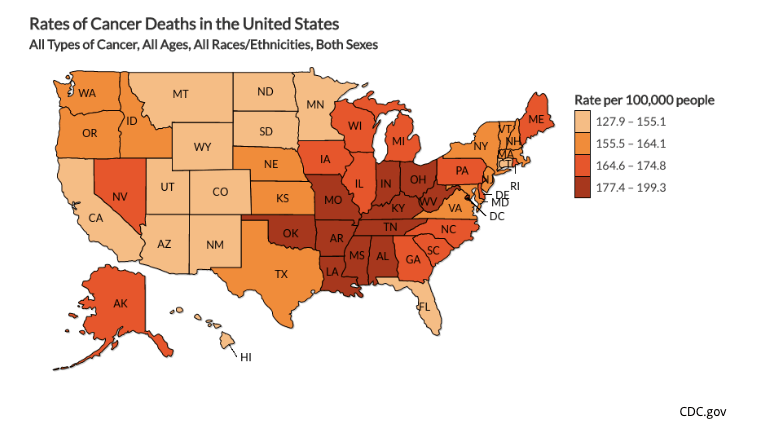
That mission became more urgent for me today in the face of some jarring statistics. Tennessee and the surrounding regions have some of the highest cancer death rates in the United States.

Link to source.

Comparing the map above to the map below that shows new cancer cases diagnosed by state, incidence, the frequency with which cancer occurs, doesn’t fully explain higher death rates.

Link to source.

My heart sank when I saw these data, and really drove home my privilege. I am well-educated, have a high socioeconomic status, have access to insurance coverage and some of the best health care available in the United States, and I have inside information based on my work as a breast cancer researcher.

I’m lucky. Far too many of my fellow Tennesseans and Southerners are not. My Institution and Affiliated Cancer Center serve this region. I want to be a part of better serving patients in this region, which will be a HUGE focus of my advocacy work.

What will this work involve? One of the ways I think I can be of use is by helping recruit patients for clinical trials. According to what I learned today, many promising new drugs do not make it through Phase III clinical trial testing* due to failure to accrue enough patients to sufficiently test their effectiveness. That’s such a shame and missed opportunity. Of course, there are many barriers for patient participation in clinical trials – fear/lack of understanding; lack of access due to barriers to travel/transportation, unmet childcare needs, inability to take time off work, etc.; disparities that make minority populations reluctant to participate**. While I am not in a position to combat access to trials, I am in a position to serve as a liaison between patients and clinical researchers accruing patients for trials. I can help educate potential trial participants in the process, assure them of their rights (including the ability to stop participating at any time), alleviate fears through helping patients understand the benefits and how they might be helping a great number of future cancer patients. I am also working with African American advocates and other advocates of color to understand and be sensitive to those communities, their histories, and their needs.

Those needs are great, particularly in terms of breast cancer outcomes. African American women diagnosed with breast cancer have lower overall survival rates compared to white women. Finding out why is crucial for closing the gap. Increasing African American participation in clinical trials is a key part of that process.

Link to source.

For more on cancer disparities across ethnic groups, click here.

Bottom line: I’ve got work to do, and I’m excited to work with my fellow survivors to help patients now and in the future. Interested in becoming an advocate? Here are some resources that can help! My Institution’s Advocacy Resources, How Patient Advocates Help Cancer Research: Expert Q&A, Why Patient Advocacy is Vital.

*I’ll cover clinical trials in more detail in a future post. Click here to learn more now. Phase III trials test drugs that have already been proven safe and promising in terms of effectiveness.

**African Americans remember the horrific abuses perpetrated by scientific investigators, including those in charge of Tuskegee Study of Syphilis – which resulted in hundreds of African Americans being denied treatment in order to study the long term effects of untreated syphilis

Scanxiety: My Left Boob Just Won’t *&^#ing Behave!

Warning: This post is full of swears. It’s been a total shit day.

Getting “normal” annual mammograms after breast cancer is nerve wracking. I get that. Literally. Today was my second routine mammogram after completing surgical and radiation treatments. What (I’d hoped) would be an hour long visit followed by an, “All clear! Go, and live happy,” turned into a 3 1/2 hour long ordeal that consisted of FOUR FUCKING IMAGING sessions, an ultrasound, and scheduling another biopsy.

This is fucking bullshit.

Link to source.

For those of you who’ve been there, done that, bought the T-shirt (that reads, “Of Course They’re Fake – The Real Ones Tried to Kill Me”), you get it. I’ve had several survivors in my circle offer support, well-wishes, and cat memes, and I’m grateful. For those of you who haven’t been there (and I hope you never are), let me give you some background. At the time of this blog post I’ve had:

Six biopsies (last time was a charm with the Big C)

Two lumpectomies (one to remove a benign papilloma and the other to remove cancer – followed by oncoplastic reconstruction involving a reduction and lift)

Implantation of TWO Savi Scout devices to mark my tumors (this was mammography assisted, meaning I was in fucking compression while two GINORMOUS needles the size of small screw drivers were stuck into my left boob and I actually saw the tip of one come out the other side)

Twenty-eight rounds of radiation on my left boob – crispy bacon, anyone?

And a partridge in a pear treeeeeeee!

Link to source.

You’d think that would be enough. Seriously. But, alas, not for me. Whenever I go in for routine checks, I get the extra imaging, the call backs, the ultrasounds, and the biopsies. My breast are pincushions. It’s not fun.

Today’s visit started out well enough. I went into the room with my lovely robe, wiped off the deodorant I’d put on (because I forgot that I wasn’t supposed to use any), flopped out one boob, then the other, let the nice nurse get to second base while positioning my boobs, had my (first) mammogram scans and returned to the waiting room. Aside from being a bit sore (the left boob, cancer boob, is harder than the right thanks to radiation and it’s pretty uncomfortable in the old squeezy squeezy machine), I was content. I texted the lab to tell them I hoped I’d be in soon and then enjoyed some Facebook and Twitter time while waiting. I also had in-room entertainment in the form of a brash and bawdy lady who was Skyping – loudly – and having the kind of inappropriate conversation that you kind of want to film because it’s disturbingly awesome and no one will believe you unless you record it. All in all, not too shabby.

Link to source.

Then, they called me back. Just need a few more images, they told me. Nothing to be concerned about. I groaned, but was still okay. Considering my normal experiences with mammograms, this was a drop in the boob bucket. I got squished, got sore, and was escorted back to the waiting room filled with other women in those high fashion robes you get when you have to get your boobies squished. My entertainment was gone, and I missed her terribly, but I was slightly more concerned with the passage of time.

I mean, I did have work to do.

They called me back again. This time, the nurse (BTW, they’re all wonderful and I don’t fault them for any of this) explained that they’d found a spot. It was of concern because they hadn’t seen it on my previous post-treatment scans. They hadn’t seen it, because apparently this time the nurse was so good that she got images closer to the chest wall and they were seeing new areas for the first time. On the one hand, go nurse! Great technique!

On the other hand, WTF is the spot? Is it something I should worry about? We don’t know how old/new it is because we haven’t seen it before. Seriously, I’m two years out. I shouldn’t have a recurrence.

They needed another set of scans to make sure it was real, especially since they’d seen it only in one image/plane. So, for the third time, back in the boob vise for a trip to fuck that hurts land.

Link to source.

I go back to the waiting room. And…I’m called back for – I shit you not – ANOTHER round of images. This time they let me stay in the room with the owie machine while I wait for the radiologist to have a peek. Shortly thereafter, they tell me, as I predicted by this point, it was ultrasound time!

I’ve had plenty of ultrasounds.

As is my standard practice, I asked if I could see the screen, explaining that I’m a breast cancer researcher. Yeah, I got breast cancer, too, the irony isn’t lost on me. Yes, I’ve become more passionate about my research and am getting into advocacy, too. Sure, I’d love to see the mammogram image of the spot in question. Interesting (i.e. I have no idea if what I’m seeing is bad or not – then again, neither does anyone else or I wouldn’t be here).

I flopped out my left boob, the one I’d called a pain in my ass during my 4th time in the booby squeeze machine (and made the nurse giggle snort), put my left hand over my head, got the ultrasound goo smeared over my bad boob, and then the nurse commenced with the scavenger hunt via wand. And she wanded. And she wanded. And she wanded.

Link to source.

My arm was getting a little numb, and I was a bit concerned that she wasn’t taking pictures, but I just chilled. Then, she told me she wasn’t sure anything she was seeing matched the spot on the mammogram. So she grabbed the radiologist, who came in, goo-ed me up, and wanded. And wanded. And wanded.

The radiologist laid it out for me. They’d seen this spot, which was uniform in shape, an oval, and was most likely nothing to be concerned about – fat necrosis, an artefact of scarring, or a benign lesion. Given that it was in my bad cancer boob, she recommended a biopsy. And since they couldn’t find it by ultrasound, I would need a mammogram guided biopsy.

That’s exactly as sucktastic as it sounds. I will be put in (terribly uncomfortable) mammogram compression and stay there while someone jabs a fucking biopsy needle into my boob. Yes, I’ll have lidocaine, but that’s not going to help with the squeezy squeezy or the HORROR!

Link to source.

And, while I wait 9 days for the biopsy and another 5-7 days for the results, I’ll be stressed out. This is the reality for survivors. We’re ALWAYS nervous with scans, and it’s compounded when extra examinations are needed. It’s terrifying. Yes, rationally I understand that the odds of finding another tumor are extremely low, but the fear is visceral and always there. I’m worried it always will be. Most days, I’m upbeat and snarkily positive, but not today.

Some days, the best you can do is just hope for better tomorrow.
Science Break! Outreach – Getting High School Students Excited About Cancer Research!

Last week, I had the opportunity to speak with students in Freshman Biology classes at Overton High School here in Nashville. I’d given science demonstrations before—including fun with dry ice and a mouse organ scavenger hunt/anatomy lesson that was fun for everyone except one squeamish student. But I’d never spoken in detail about cancer biology and cancer research.

I’ve been saying (read: complaining) for YEARS about how scientists are terrible about speaking with the public. We talk to each other all the time at our institutions and at scientific conferences, but not enough of us reach out to our communities, and that’s a shame. First of all, we as scientists should be advocates for the scientific process and for the progress we’re making. Second, scientists are in a position to combat scammers, pseudoscience, and mis/disinformation by sharing our knowledge. Third, most of us are funded, at least in part, by the federal government. I’m funded by The National Institutes of Health (NIH) through The National Cancer Institute (NCI) – those agencies are funded by federal tax dollars. Since I’m paid by tax dollars, I personally feel an obligation to be able to explain what I do and why it is important to taxpayers in terms they can understand.

So, in my new role as a cancer researcher who has also survived cancer, I’m putting my time and effort where my big fat mouth is and getting out there to be an ambassador and advocate for cancer research! I occurred to me that the slides from my recent presentation for high school students would make a great addition to this blog. It covers how normal cells transform into malignant tumor cells at the molecular level.

The goal of this presentation is to provide a brief overview of how damage to DNA, the genetic code that is used to build proteins (the workhorses of a cell) can lead to uncontrolled cell growth and survival – both hallmarks of cancer. Damage to DNA and failure to properly repair that damage can lead to mutation (change in the code), amplification (more copies of a gene than normal), deletion (loss of DNA and the genes encoded). When changes in DNA occur in genes that regulate cell division, this can contribute to cancer. Uncontrolled cell growth is fundamental to cancer.

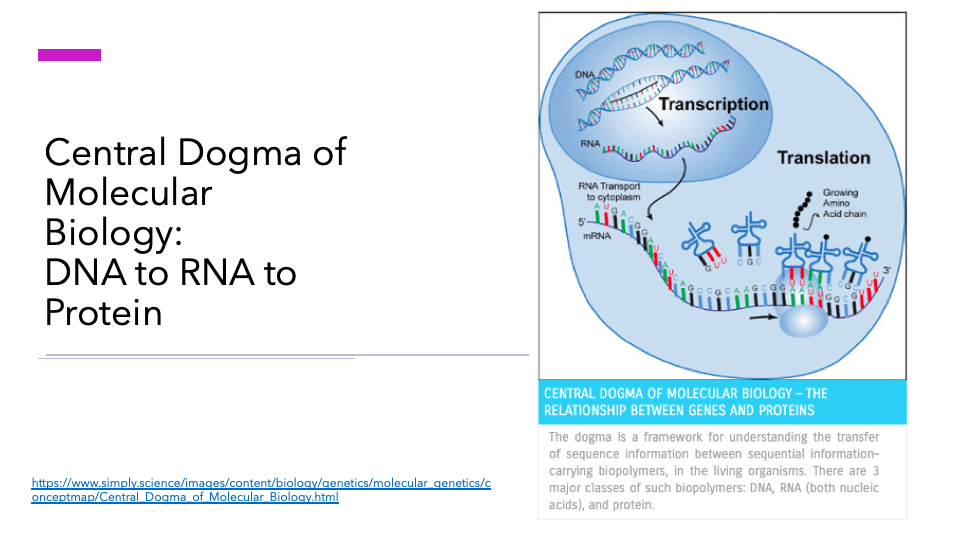
To understand how DNA damage leads to cancer, we first have to review what DNA actually does – The Central Dogma of Molecular Biology. I covered this in a previous post, but I’ll go over it again for the (vast majority of) people who don’t spend their days thinking about and doing molecular and cellular biology research. The more frequently you see information, the more likely you’ll be to remember it.

DNA is the blueprint that contains instructions for how to build every protein a cell needs for its normal function. Since, as we’ll see in the next few slides, DNA damage can cause huge problems for cells, DNA is protected in an organelle within the cell called the nucleus. It is only unwound from its double helix structure during (1) DNA replication when the cell makes extra copies before dividing, and (2) when tiny portions, genes, are transcribed (copied) into small units called RNA. RNA gets transported out of the nucleus where the code is translated to make proteins. Each sequence of three base pairs encodes a specific amino acid (building blocks of protein). Take home = DNA to RNA to protein. And DNA damage leads to problems with the proteins they encode.

So what do proteins do? The answer is pretty much everything a cell needs to function. Two specific classes of proteins, those involved in regulation and signaling, are the targets of mutations/amplifications/deletions that can lead to cancer. Regulation involves turning cellular processes, like cell division, on and off. Signaling involves proteins transmitting messages from outside the cell to the inside — including messages that tell the cell when to divide.

DNA can be damaged or altered by internal factors and external factors. Errors occur in replication (copying during cell division), and if they aren’t repaired properly, they can lead to mutations. Other things that can damage DNA include ultraviolet light (sunlight – skin cancer), chemicals (carcinogens) in cigarette smoke, and exposure to radiation. Base mismatches can lead to a change in the code. Single-stranded and double-stranded breaks can lead to amplification or deletion of essential genes in the cell division process. Damage to DNA in genes that encode DNA damage repair proteins are especially harmful, as failed repair leads to more mutations, amplifications, and deletions that accumulate and lead to cancer.

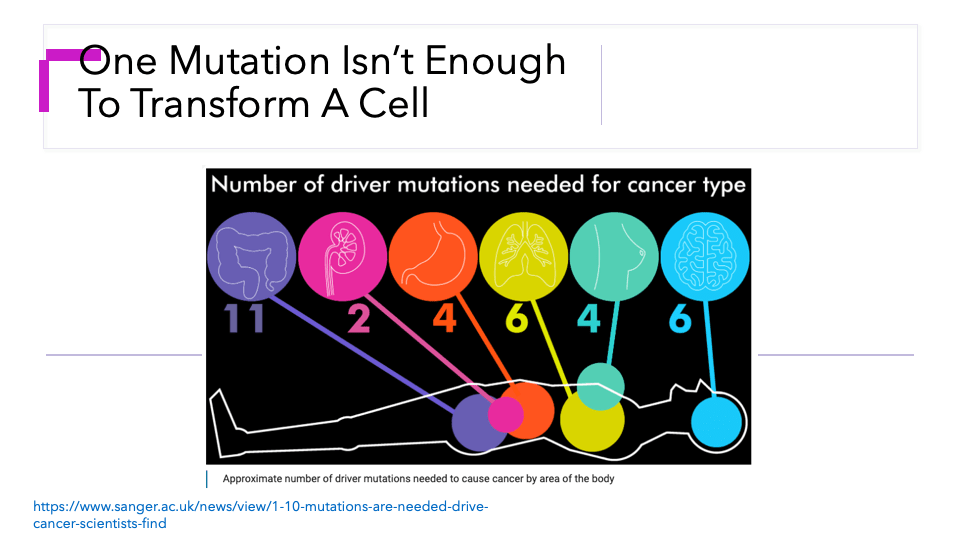
Mutations and DNA damage occur relatively infrequently. Most mutations are silent, meaning that they don’t affect the production or function of the protein the gene encodes, and it takes more than one mutation to transform a cell and make it cancerous.

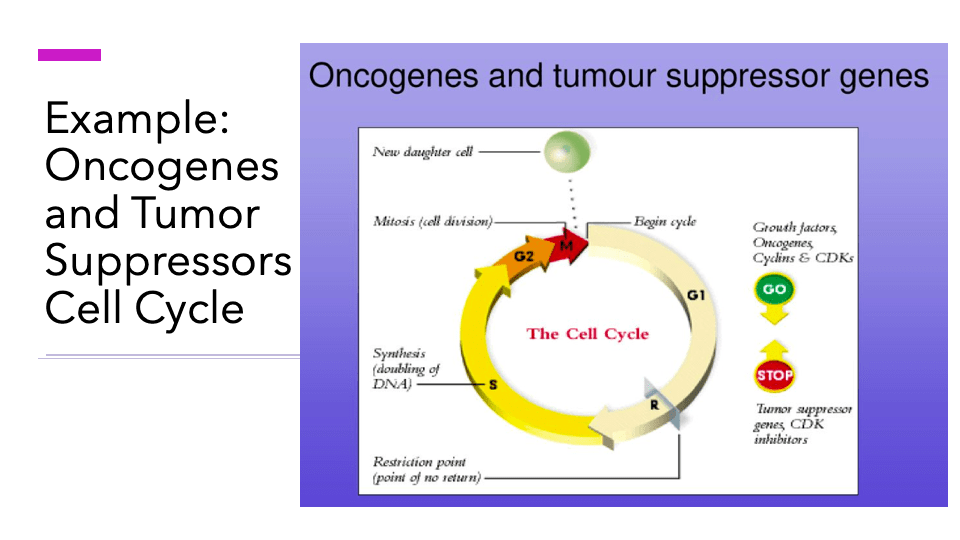
The types of genes that drive cancer include oncogenes and tumor suppressors. In the cell division process, there are many on/off switches that tell the cell when to divide and when to stop the process of division. Oncogenes, which are amplified (more copies of the gene than normal made after DNA damage) or mutated to be super active, are the “go” signals, like a car’s accelerator. Tumor suppressors, which are deleted (genes are lost after DNA damage) or mutated to be non functional, are the “stop” signals, like a car’s brakes. A combination of amplified/mutated oncogenes plus deleted/mutated tumor suppressors transform a normal cell into a cancer cell that then divides uncontrollably, like a speeding car with the brake lines cut.

On/off switches in the cell cycle, the series of steps that a cell follows to divide and make two cells, have the potential to become oncogenes and tumor suppressors.

This slide shows an example of an oncogene and tumor suppressor in a signaling pathway that contributes to breast cancer. Cyclin-dependent kinases (CDK) are enzymes that tag other proteins with phosphates (P) groups, which serves as a signal for the tagged protein to perform its function. In the case of CDK4/6, its substrate RB (off switch for cell cycles) is tagged with phosphate, which marks it for destruction by the cell. When RB is destroyed, it releases its buddy E2F, freeing it to help the cell make more proteins required for cell division. CDK2/4 function is activated (on switch for cell cycle) by binding to its buddy cyclin D1, and is deactivated by its inhibitor p16. The gene encoding cyclin D1 is commonly amplified (more copies) in breast cancer, and the gene encoding RB is commonly mutated or deleted (gene lost or mutated to make a non functioning protein). Thus, cyclin D1 is an oncogene, and RB is a tumor suppressor.

That’s the overview, but this time I include specific examples. There are many other oncogene drivers and tumor suppressors that contribute to breast cancer and other cancers. I’ll cover some of those in future posts. Hope y’all enjoyed this Science Break! Shout out to Dr. Shannon Youngman and the students from Overton for hosting me and asking some great questions!

Don’t Be A Hero – See A Therapist!

Living with cancer (even post diagnosis, treatment, and in remission, once you’ve had cancer, you’re always living with it) is weird. One minute I’m going about my day and not thinking about my body, my janky scars, and what’s left of my boobs (which I’m soooooooooo grateful to still have). Then, at strange, random moments, I’ll suddenly stop and think, “Fuck, I had cancer! I might still have cancer. What if it’s still there? What if it’s hiding out in my body and lurking, getting ready to say ‘Boo!’ two, five, ten, twenty years down the road?”

That shit will keep you up at night, give you panic attacks, make you hypervigilant (i.e. your lizard brain starts looking for threats around every corner), and make you tough to live with – even for you. I’d been down that road before with two bouts of postpartum depression (PPD) after the birth of each of my children. I recognized the symptoms once I slowed down and stopped using my favorite unhealthy coping mechanism – avoidance. Shortly after my diagnosis, I worked to the point of exhaustion in the lab, at home, and on my side gig, staying up late in the name of productivity and maximizing creativity, but I wasn’t fooling anyone.

I was fucking terrified.

After a year and a half of ups and downs – with a short stint of therapy before I learned I wouldn’t need chemotherapy – I gave myself a cosmic kick in the ass, acknowledged that I was not fine, and that I needed help. I’d tried using the Cognitive Behavioral Therapy (CBT) techniques I’d learned while in treatment for PPD, and I’ve been on anti-depressant medication for years (and make no apologies for it – if you can’t make your own neurotransmitters, store bought is fine), but I was still losing sleep and spending so much time worrying about if/when the cancer might come back that I wasn’t fully enjoying the life I was lucky to have.

I stopped, took a deep breath, and (finally) pondered what I’d been through with cancer – the shock and terror of the diagnosis; the fog of uncertainty while waiting for pathology reports, blood work; weighing the pros and cons of each surgical options; the needles for biopsies and implantation of SAVI SCOUT devices; waking up to a new body after surgery; finding out I had a positive lymph node; the burn of that tender healing flesh during and after radiation therapy; the indignities of hormone suppression therapy; loss of time with family, loss of work, loss of my life as I knew it and coming to terms with a new life.

I was alive, I’d been able to skip chemotherapy, and my prognosis was great, and yet, I was still broken. Looking at the list from above, it seems like a no-brainer. Of COURSE I was broken. But my biggest blindspot was and is me. It took a while, but I finally understood that I couldn’t process this on my own. I needed help so I could be the best version of myself for my family, my friends, my colleagues, my community, and myself.

So I got myself back in therapy, got a refresher on CBT along with adding mindfulness meditation, breathing exercises beyond the standard inhale for four beats and exhale for four beats to stave off anxiety (inhaling for four beats and exhaling for seven worked wonders for my sleep cycle), and the COOOLEST of all new (to me) techniques – postponed worrying! This has been a game-changer for me. I’m a scheduler – working mom with two side gigs and a husband who’s out of town half the week. I’m also a worrier. The simple act of taking time to sit down and devote my attention to my worries (writing them down and, using CBT techniques, identifying and fighting cognitive distortions) for a set amount of time has helped me NOT dwell on those worries for the rest of the day.

There are no downsides to taking care of your mental health, and plenty of benefits. The best part? In addition to helping you live your best, quality life, taking care of your mental health can be beneficial to outcomes like decreased recurrence and longer survival. References here and here.

Will there still be hard days? Absolutely. And it’s okay to go down into the well of despair. What therapy can do is give you the tools you need to climb out of that well and get back to your regularly scheduled life.

Looking for mental health care resources, or maybe support groups? Here are some places to start: American Cancer Society, American Association for Cancer Research, Susan G. Komen, Cancer Support Helpline. Gilda’s Club is also a fantastic resource for cancer patients, survivors, and their families!

Special note – this post is by no means an endorsement of “the power of positive thinking” and toxic positivity (that’s a thing – people who tell you to just shut out natural, negative emotions associated with trauma are dickwagons and you should walk away from them. You have to process your emotions in a healthy way).

Sex After Breast Cancer – What You Can Do to Get Your Groove Back

This is the first in a series of posts about sex, sexual dysfunction, and available treatment options for breast cancer survivors. Before we get started, disclaimer: I am NOT a medical doctor. I’m speaking as a scientist and a survivor. I encourage all breast cancer survivors to have frank discussions with their oncologists and other physicians on their care teams about sexual dysfunction that often results from surgery, chemotherapy, radiation, estrogen suppression and other therapies.

First thing’s first – do not let ANYONE tell you that you shouldn’t complain about sexual dysfunction because (a) you should just be grateful to be alive, (b) you’re too old to be thinking about sex, (c) it’s just something women have to deal with because of the mystery and complexity of women’s bodies or some other fucking bullshit. You DESERVE to experience sexual pleasure and satisfaction. You have every right to SEEK treatments.

Seriously, there are at least 4-6 boner pills on the market, and no one’s busting old men’s balls about using them. And insurance covers them. Spoiler alert – insurance doesn’t cover most of what’s available for women. #fuckthepatriarchy

So, what causes sexual dysfunction? Well, for starters, getting your boobs CUT ON OR CUT OFF has a MAJOR impact on body image and sexual function. With a total mastectomy*, most women lose their nipples as well as sensation in the area of reconstruction. Now, for me, nipple sensation is a pretty big deal for sexual gratification. I was lucky enough to be a candidate for oncoplastic surgery – which is a fancy way of saying I was able to have a large lumpectomy followed by breast reduction and a lift. Even though I was lucky enough to have breast conserving surgery, my nipple sensation isn’t the same. I mean, my surgeon (who is wonderful and this is not meant to disparage him in any way) cut around my nipples in the process of moving them higher on my breasts after removing excess skin and lifting. Sometimes, I get weird tingling sensations akin to electric shocks in my nipples, and the psychological effects of surgery definitely affected my desire to have them touched and stroked. I have a FANTASTIC husband who helped me find my new normal in the bedroom, but it was and still sometimes is a struggle.

First best advice – get to know your new body on your own. Explore the terrain, find out what feels good and what doesn’t. There’s an adjustment period, and you won’t be the same, but you CAN find pleasure again.

In addition to surgery, breast cancer treatments like chemotherapy, radiation, estrogen blockers, and other drugs can wreak havoc on your body, your sexual desire and responses, and your ability to achieve orgasm. In my case, thanks to medically-induced menopause, I’ve experienced vaginal dryness and problems climaxing. My spirit and body are willing for the most part, but it’s a LOT harder to get there. Fortunately, I’m not shy and asked my medical oncologist what could be done, and even better, I found out that there are actually options available to help. Not enough. We need more research, but there are treatments available. I’ll talk about a few of them in this post and will cover more as I learn about them and try them.

**.Vaginal lubrication and hydration – chemotherapy (which can push women into menopause) and medically induced menopause/estrogen suppression therapy can make your vajazzle as dry as the Sahara, which is uncomfortable in general and during sex in particular. Replens vaginal moisturizer is commonly recommended, and it’s helped me personally. Another product I’ve tried is Revaree, a vaginal moisturizer that contains hyaluronic acid, which attracts and retains moisture. I’m on the fence about which I like best, but both have helped, and they have the benefit of being hormone-free. However, be aware that Revaree, unlike Replens, is not compatible with condoms. Aside from moisture and hydration, lube is your best bedroom friend!

**Arousal and climax – I was pleasantly surprised to learn that there are more options than I anticipated. One that I tried recently is Vyleesi, a treatment for hypoactive (low) sexual desire disorder (HSDD). It’s injectable, so if you’re squeamish about needles, take that into consideration. On the other hand, it’s like an Epipen in that it’s preloaded and injection is as easy as a push and a click. One of the side effects is nausea, which I did experience, but it’s reported to go away over time. I’ll report back on that. What I CAN report is that it worked well for me in terms of achieving orgasm! One trial so far, but I’ll repeat the experiment for sure. Something that I haven’t yet tried but plan to test out are topical treatments, including “scream cream.” There are various formulations that can include hormones or be hormone-free. The hormone-free varieties often include active ingredients like sildenafil (active ingredient in Viagra), and other vasodilators, which stimulate blood flow by relaxing the vascular smooth muscles. These treatments do require a prescription and can be ordered from online pharmacies.

Toys and aids – vibrators are AMAZING! There are so many varieties to choose from, and they’re super fun to use and add to your bedroom game. I used a couple before cancer, and they are staples for me post breast cancer. Some of my favorites include the Dame Fin, Butterfly Kiss, and Rabbit styles. Don’t want to visit a sex shop? You can find EVERYTHING online, including sex toys, and have them delivered discreetly right to your door. Again, test them out and explore on your own as you get to know and accept your new body. Find out what works for you, and definitely get your partner involved in the fun. Pros include price and safety. You don’t have to spend a fortune, and you don’t need hormones or other drugs to enjoy toys – just don’t go…too big too fast.

**Laser Therapy – Not going to lie – hearing the word “laser” as a treatment for vaginas, as in OMFG you’re going to LAZE my vajayjay??!! scared the crap out of me. But, being a rational person, I listened with an open mind and am now considering this treatment. And, treatments like this offer hope for women suffering from vaginal atrophy. MonaLisa Touch is one laser treatment option that stimulates collagen production for tissue regeneration. Aside from the whole laser to the vagina thing, cons include expense. And (not surprisingly, but still infuriating) insurance doesn’t cover the procedure.

State of mind – A healthy body and mind are key for great sex. Aside from the usual stuff – eat right, drink plenty of water, exercise – mindfulness and meditation are great tools for stress relief and relaxation, which is key to satisfying sex and reaching climax. They’ve helped me in and out of the bedroom. Know what else has helped? Romance novels! Now, I’m totally biased because I write romance as my side hustle, but I was an avid reader LONG before that. A great love story can be just the thing to spark desire and fantasy. The mind is truly the most powerful sex organ. One of my go-to sites for romance recommendations, Smart Bitches Trashy Books, covers romance novels featuring cancer survivor characters and recommendations for cancer survivors!

This is the short list and the beginning of my coverage of this topic. I hope it becomes a conversation. Feel free to comment or message me. Share your experiences, tell me (and my growing group of followers) what works for you, what doesn’t, and how you go about broaching the subject with your doctor, your partner, or other professionals. Knowledge is power, and knowing you aren’t alone out there is powerful and healing, too!

*Nipple-sparing mastectomies are a thing and definitely worth asking your breast surgeon about.

**Most of this information comes from the Women’s Institute for Sexual Health (WISH) in Nashville, a FANTASTIC resource for women experiencing sexual dysfunction.

BIG NEWS! I Have A Literary Agent!

I’m thrilled and delighted to announce that I’ve signed with Barbara Collins Rosenberg of The Rosenberg Group to represent a nonfiction project based on my experience as a breast cancer researchers who was diagnosed with breast cancer! My goal is to expand on what I do here, providing accessible science with a healthy dose of humor and hope. Here’s a preview from my proposal:

Can I talk to you about my personal relationship with my breasts?

I’ve spent twenty years working as a biomedical breast cancer researcher. Then, I was diagnosed with breast cancer. I thought I knew breast cancer before it whacked me upside my left boob and left me bleeding on the curb of uncertainty. The purpose of this book is to share my personal adventure with breast cancer, from the laboratory bench to my own bedside, and to provide accessible information about breast cancer biology for non-scientists. I say adventure, because I’d rather think of it as action movie with some really cool side quests instead of another tragedy-to-triumph saga. I’m not big on sagas. I am big on kickass intellectual badassery, pathological nerdiness, and talking about my sweet, sweet rack.

Why do we need another cancer memoir? In a sea of inspirational stories, celebrity survivor stories and physician memoirs that bring a clinical perspective, nothing I’ve found in the current market tackles breast cancer through the lens of a breast cancer researcher who became a survivor. We live in an age of fake news and pseudoscience, made worse by the pervasive anti-intellectual and anti-science political culture gripping the United States and much of the world. The Internet and social media are plagued by scammers selling “alternative medicine” and woo woo “cures” for cancer. Through Talking to My Tatas: A Breast Cancer Researcher’s Adventure With Breast Cancer And What You Can Learn From It, I offer accurate, evidence-based science that is accessible to laypersons, including the more than three hundred thousand individuals diagnosed with breast cancer every year*, their caregivers, and their loved ones.

Knowledge is power, and lack of it can lead to overtreatment, unnecessary pain and suffering, and can even be deadly. By demystifying the process from mammograms, biopsies, pathology and diagnostics, surgical options, tumor genomic testing, and new treatment options, I aim to offer hope in a story intended to blend the humor and delivery style of  Jenny Lawson’s Let’s Pretend This Never Happened (A Mostly True Memoir) with the integrity and scientifically sound beauty of Siddhartha Mukherjee’s The Emperor of All Maladies: A Biography of Cancer.

The Power and Rewards of Mentoring

Medical students and their mentors in MCN Medical Scholar conducting breast cancer research in Dr. Dana Brantley-Seider’s lab for Medical Scholars Program Vanderbilt University Medical Center Photo: Anne Rayner; VU

This year I have the great fortune of mentoring a talented and dedicated medical student in my lab, Kalin Wilson. Her interest is in oncology, so it’s a great fit for my ongoing and new research directions. She’s working on two projects with similar goals: to identify and characterize new drug combinations and new experimental therapeutics for triple negative breast cancer in pre-clinical studies. This is an urgent unmet need in the clinic. Triple negative disease is a subtype of breast cancers that do not express hormone receptors (estrogen receptor and progesterone receptor) or cell surface HER2 (amplified in ~25% of breast cancers). These receptors are druggable targets, and their absence limits treatment options for patients with triple negative breast cancer to surgery, radiation, and chemotherapy. Triple negative breast cancers are aggressive and disproportionately affect young women and women of African descent. Our goal is to find molecular targets for new drugs to give women with this type of breast cancer more and better options.

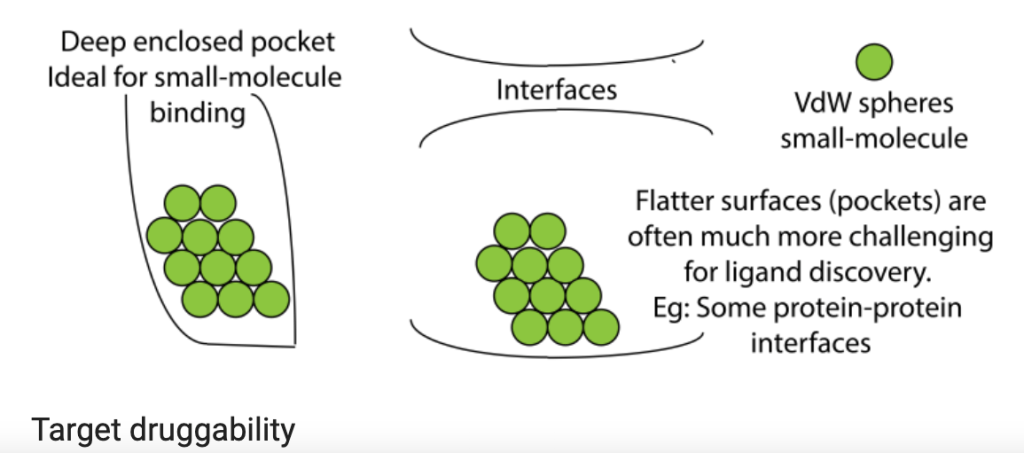
My student’s primary project is to test nanoparticle delivery systems to transport gene therapy to tumors. Many of the genes that drive cancer code for proteins that aren’t easily druggable by small molecules that fit neatly into a unique structural region in the target protein to block its function (e.g. deep enclosed pocket versus flat, relatively uniform interface or surface, as shown in the figure above). But what if we could stop production of cancer-driving proteins at the level of gene expression? This is actually possible in the laboratory setting in a process that exploits messenger RNA, the protein-making instructions that are copied from DNA and used by protein producing cellular machinery (see figure below). The use of small interfering RNA (siRNA) gene therapy, which causes the messenger RNA that encodes the protein’s blueprint to be destroyed, can theoretically stop production of any protein, which would make any target druggable. One of the challenges, however, is delivery of siRNAs to tumors. siRNAs tend to be unstable, so they can be easily destroyed by immune cells or taken up by the liver or kidneys as a part of their normal clearance functions. To overcome those delivery barriers, many biomedical engineers are applying nanotechnology, designing nanoparticles that surround the siRNA molecules. These nanoparticles shield and protect the siRNAs in circulation and can be modified to help homing to the tumor. In collaboration with Dr. Craig Duvall, we are testing nanoparticles delivering siRNA to destroy the blueprint for Rictor, a protein that we believe is essential for tumor cells to grow and prevents them from dying when they’re supposed to. Results so far are promising!

What I hope to give Kalin is a research experience that feeds her passion for science and drug discovery, to foster her natural skills and curiosity, and to keep striving for the goal of bench-to-bedside translational research. What she’s given me is her clinical perspective, something that has enriched my research and inspired me to do more directly translational research with the goal of clinical application. She’s also given me the gift of fearlessness and enthusiasm, which young scientists always possess in abundance and, fortunately, is contagious. The rewards of mentoring the next generation of scientists are many, but the synergy between experience (mentor) and fresh ideas and perspectives (mentee) is perhaps the most valuable.

Team Lab Rats at Nashville Making Strides Against Breast Cancer Event

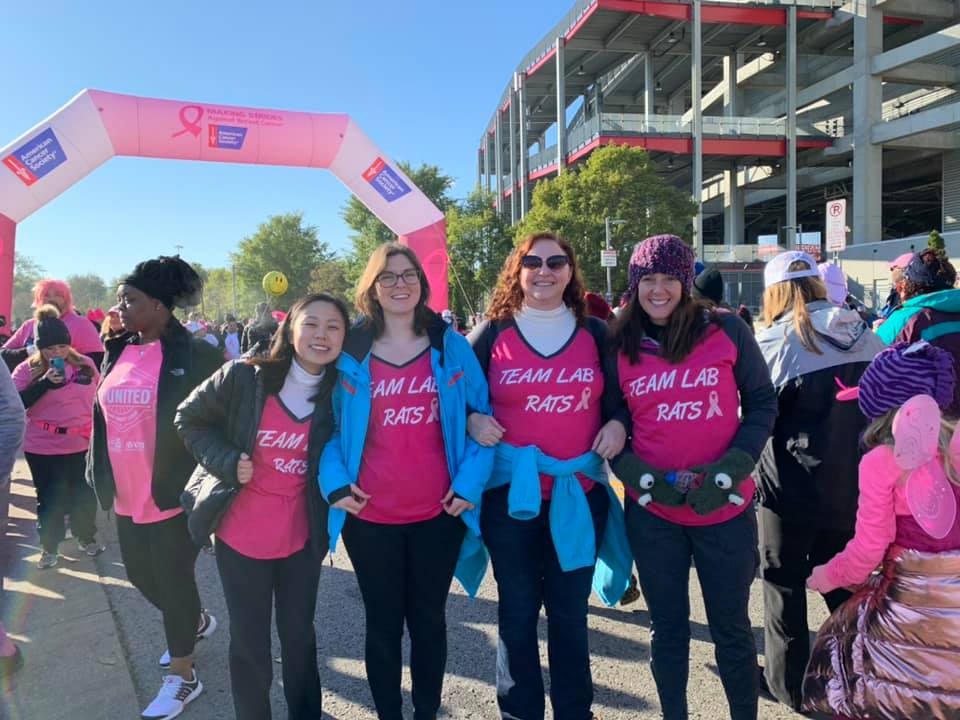
Laura Kim, Kalin Wilson, Dana Brantley-Sieders, Rebecca Cook – Team Lab Rats!

Days like today fill me with so much energy, enthusiasm, and hope.

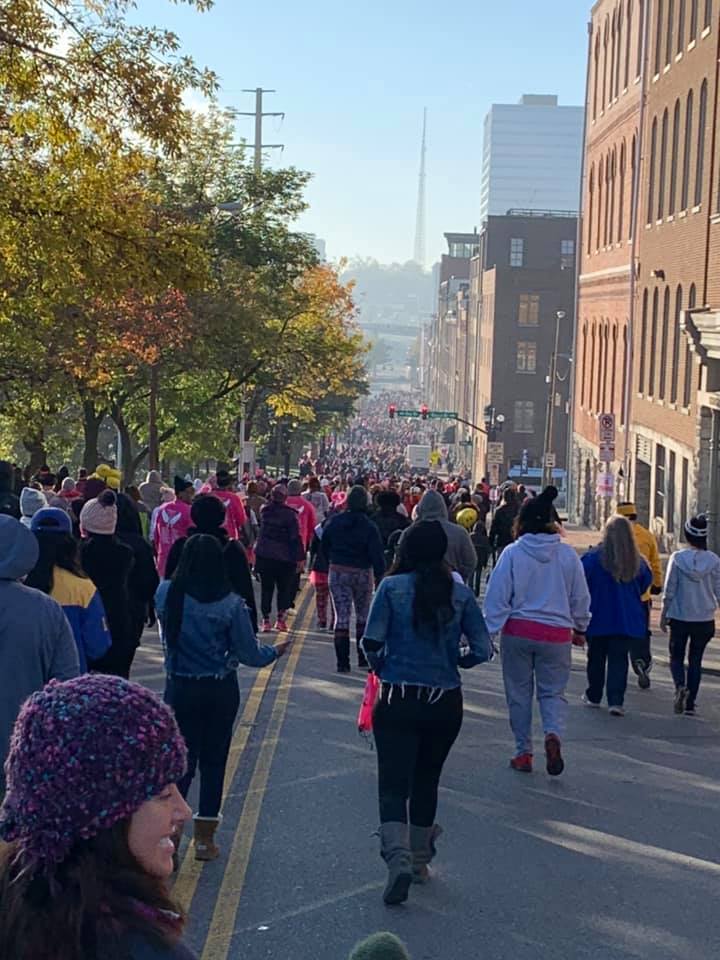
Nissan Stadium and the surrounding area were JAM PACKED with people – women, men, kiddos, cute doggos, survivors and those who love and honor them – gathered together in a unified purpose: to raise awareness and money for breast cancer research, patient assistance, and to keep making strides!

My wonderful friends/colleagues, including graduate student Laura Kim, medical student Kalin Wilson, and fellow investigator and collaborator Rebecca Cook, joined me to form Team Lab Rats. They were with me through my own adventure with breast cancer and are with me in the laboratory as we search for new and better treatments for molecular targets that drive breast cancer growth, survival, and metastatic progression. It’s a beautiful thing. I’m a lucky woman.

Together, we raised $1,500, and I couldn’t be prouder of these amazing women and all of the teams who raised hundreds of thousands of dollars for this cause that is so near and dear to my heart. Nashville, my home city, you make me so proud!

Look at that crowd!
My AMAZING Team honored me at the Avon booth by Kissing Breast Cancer Goodbye!

To everyone in Nashville and around the United States (and the world), thank you for your support. It means more than you know to survivors. Thank you.

Science Break! Breast Anatomy, Structure, and Function

This is the first in a series of posts dedicated to the science of breast cancer, so let’s start from the beginning with normal breast. In order to understand how cancer forms and grows, you first have to understand how non-cancerous cells behave and function. Why? Because fundamentally, cancer is an aberration of normal function. Cancer cells were once normal cells. A series of events that involve mutation in the cell’s DNA, the genetic blueprint that encodes instructions and specific modifications for that cell’s function that lead to changes in (1) the cell’s ability to divide, (2) the cell’s response to normal programmed cell death, (3) the cell’s ability to repair damaged DNA. These events reprogram the cell’s function and cause uncontrolled, abnormal cell growth, and these changes are alterations in the normal cell programs that maintain the balance between new cell growth and old cell death that maintain healthy cell function.

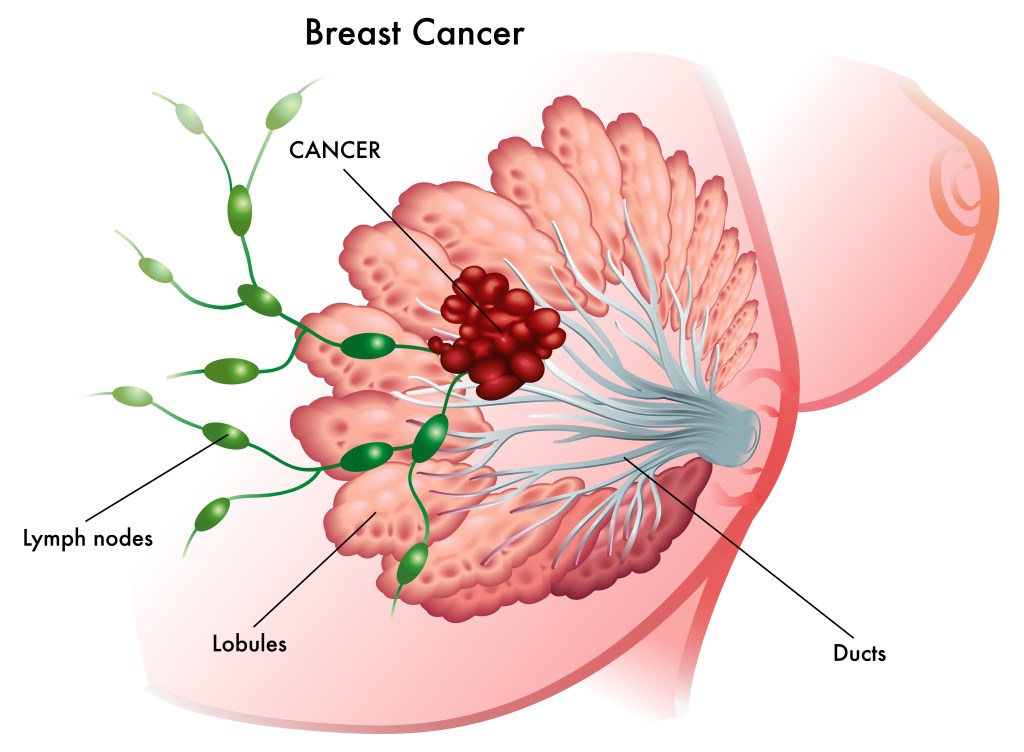
Let’s start with anatomy. Breasts are made up of milk-making (lobules) and shuttling (ducts) glandular epithelial cells anchored by connective tissue and support cells in a sea of squishy fat (adipose tissue). The glandular epithelium goes through a massive growth cycle during pregnancy and becomes a milk factory for nursing young. When the young stop nursing, the factory shuts down, most of the cells die, and the epithelium rests until the next pregnancy. The same cellular programs that control growth and death in these normal cycles become highjacked when a cell begins to transform from normal to cancer. This includes programs regulated by hormones like estrogen and progesterone, as well as cell surface growth factor receptors like HER2, which we will cover in future posts.

Most breast cancers form from ductal epithelial cells, but can form from lobular or other types of cells*. The most important take home message is that breast cancer isn’t a single disease. It is a collection of diseases classified by pathology (how it looks under the microscope) and molecular genetics (which collection of mutations in specific genes contribute to its formation and progression). There are at least five broad subtypes of breast cancer that can be further divided into additional subtypes: (1) Luminal A, which tend to be estrogen and progesterone hormone receptor positive (ER+/PR+) and lack HER2 alteration; (2) Luminal B, which tend to be estrogen receptor positive and can be HER2 positive or negative; (3) HER2-enriched, which tend to be negative for hormone receptors (ER-/PR-) and display amplification (more copies) of the gene encoding HER2 cell surface receptor; and (3) Triple negative, which lack hormone receptors (ER-/PR-) and HER2 amplification (HER2-)**. I’ll cover each of these subtypes in future posts, including the latest research on how they form at the molecular, genetic, and cell biologic level, and current/emerging treatment options.

To wrap things up, I’d like to share with you some of the work I did as a graduate student***, which involved understanding molecular regulation of normal breast epithelial development during puberty. Again, understanding how normal breast epithelium grows and forms as breasts develop is an important first step in understanding how things go wrong in breast cancer. The pictures in (A) show whole-mount preparations of mammary gland (a fancy term for squishing and flattening a small piece of tissue on a slide and staining it to show the epithelium in the sea of fat) of breast epithelium growing to fill the fat of developing breast during puberty. The specialized bulb-like structure (arrow) is called a terminal end bud (TEB). The schematic in (B) shows the structure of cells within the TEB as they grow from the TEB tip out and differentiate into their normal, mature structures in the area behind the TEB. Luminal epithelial cells line the ducts, while myoepithelial cells that surround the lumina structure contain contractile proteins that, like muscle, will eventually squeeze and contract to help milk travel to the nipple. Cap and body cells turn into these cell types when growth stops.

*American Cancer Society; **Susan G. Komen, ***From my graduate thesis