BIG NEWS! I Have A Literary Agent!

I’m thrilled and delighted to announce that I’ve signed with Barbara Collins Rosenberg of The Rosenberg Group to represent a nonfiction project based on my experience as a breast cancer researchers who was diagnosed with breast cancer! My goal is to expand on what I do here, providing accessible science with a healthy dose of humor and hope. Here’s a preview from my proposal:

Can I talk to you about my personal relationship with my breasts?

I’ve spent twenty years working as a biomedical breast cancer researcher. Then, I was diagnosed with breast cancer. I thought I knew breast cancer before it whacked me upside my left boob and left me bleeding on the curb of uncertainty. The purpose of this book is to share my personal adventure with breast cancer, from the laboratory bench to my own bedside, and to provide accessible information about breast cancer biology for non-scientists. I say adventure, because I’d rather think of it as action movie with some really cool side quests instead of another tragedy-to-triumph saga. I’m not big on sagas. I am big on kickass intellectual badassery, pathological nerdiness, and talking about my sweet, sweet rack.

Why do we need another cancer memoir? In a sea of inspirational stories, celebrity survivor stories and physician memoirs that bring a clinical perspective, nothing I’ve found in the current market tackles breast cancer through the lens of a breast cancer researcher who became a survivor. We live in an age of fake news and pseudoscience, made worse by the pervasive anti-intellectual and anti-science political culture gripping the United States and much of the world. The Internet and social media are plagued by scammers selling “alternative medicine” and woo woo “cures” for cancer. Through Talking to My Tatas: A Breast Cancer Researcher’s Adventure With Breast Cancer And What You Can Learn From It, I offer accurate, evidence-based science that is accessible to laypersons, including the more than three hundred thousand individuals diagnosed with breast cancer every year*, their caregivers, and their loved ones.

Knowledge is power, and lack of it can lead to overtreatment, unnecessary pain and suffering, and can even be deadly. By demystifying the process from mammograms, biopsies, pathology and diagnostics, surgical options, tumor genomic testing, and new treatment options, I aim to offer hope in a story intended to blend the humor and delivery style of  Jenny Lawson’s Let’s Pretend This Never Happened (A Mostly True Memoir) with the integrity and scientifically sound beauty of Siddhartha Mukherjee’s The Emperor of All Maladies: A Biography of Cancer.

Science Break! Intro to Cancer

Cancer, from the Latin word for “crab,” and from the Greek word for crab, karkinos or carcinos, used by Hippocrates to describe tumors, has plagued humanity since antiquity, and probably before recorded history. The name make sense, since the swollen blood vessels that surround, infiltrate, and feed the tumor mass, reminded Hippocrates of the claws of a crab.

From Brantley et al. (2002) Oncogene 10;21(46):7011-26. PMID: 12370823

As you can see from the picture on the left, this is an understandable comparison. The tumor in the picture is of an invasive mouse breast cancer. It is large, chock-a-block full of blood vessels, and looks like a disorganized blob. Not very pretty, and definitely deadly. Those blood vessels feed the tumor at the expense of the host (i.e. the patient’s body) and can help tumor cells that break off from the primary mass to travel through the bloodstream and colonize other organs in a process called metastasis.

By National Cancer Institute,
Public Domain,
https://commons.wikimedia.org/
w/index.php?curid=1972023

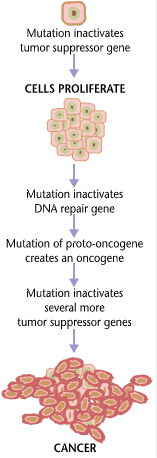
But what is cancer? Where does it come from? Why is it so difficult to treat? Let’s start with the first question. According to Google, cancer is defined as “a disease caused by an uncontrolled division of abnormal cells in a part of the body.” Uncontrolled growth is a hallmark of cancer. Where does it come from? Cancer comes from the transformation of a normal cell, which works in harmony to fulfill its assigned function in the body, into a cell that abandons its normal function and growth constraints to divide (make copies of itself), displacing and destroying normal cells and tissue, hijacking resources (e.g. oxygen and nutrients delivered by blood vessels), and if untreated or undetected, spreading to other parts of the body and destroying normal cells in tissues outside of the site of origin. Why is it so difficult to treat? It’s complicated, but it relates to at least three inherent properties of cancer: (1) cancer comes from normal cells, which makes it difficult for the immune system to recognize it as a threat; (2) cancer cells are genetically unstable and prone to collecting mutations in DNA, the genetic blueprint that controls all cellular functions – see Figure on the left; and (3) because there are many genes that control normal cell growth, survival, and other processes exploited by cancer, each cancer is unique – cancer isn’t a single disease, even within the same tissue. There are at least 5 distinct types of breast cancer (and subtypes within those types), and each is as unique as the patient in which they grow. More on that in a future post.

Unlike infectious diseases caused by viruses and bacteria, pathogens that the immune system can recognize and defend against, cancer cells are seen by the immune system as “self” in many cases (more on anti-tumor immunity and immune checkpoint inhibitors on the market in a future post). Even worse, when immune cells do enter tumors, the tumors can adapt and send signals to immune cells instructing them to protect rather than destroy the tumor. The same genetic instability that enables mutations and changes that allow cancer cells to grow uncontrollably also allow cancer cells to adapt to attacks from the immune system and therapies including chemotherapy, molecularly targeted therapies (like estrogen and HER2 blockers in breast cancer). The rapidly growing tumor mass also tricks the surrounding tissue into sending new blood vessels to infiltrate and feed the tumor, allowing tumor cells to grow, survive, and invade to metastasize.

So, in a nutshell – normal cells + mutation(s) leading to uncontrolled growth + more mutations leading to transformation into malignant cells + more mutations + a blood supply + tricking the immune system = cancer. It’s more complicated than that, but this is a good starting point for understanding cancer.

Want more information? I’ll be posting a LOT more on this topic. In the meantime, here are some really amazing resources on the subject: The Emperor of All Maladies: A Biography of Cancer (Book by Siddhartha Mukherjee and PBS documentary); SciShow’s excellent video on YouTube; Cancer Research UK’s video overview. is also an excellent resource.

The Power and Rewards of Mentoring

Medical students and their mentors in MCN Medical Scholar conducting breast cancer research in Dr. Dana Brantley-Seider’s lab for Medical Scholars Program Vanderbilt University Medical Center Photo: Anne Rayner; VU

This year I have the great fortune of mentoring a talented and dedicated medical student in my lab, Kalin Wilson. Her interest is in oncology, so it’s a great fit for my ongoing and new research directions. She’s working on two projects with similar goals: to identify and characterize new drug combinations and new experimental therapeutics for triple negative breast cancer in pre-clinical studies. This is an urgent unmet need in the clinic. Triple negative disease is a subtype of breast cancers that do not express hormone receptors (estrogen receptor and progesterone receptor) or cell surface HER2 (amplified in ~25% of breast cancers). These receptors are druggable targets, and their absence limits treatment options for patients with triple negative breast cancer to surgery, radiation, and chemotherapy. Triple negative breast cancers are aggressive and disproportionately affect young women and women of African descent. Our goal is to find molecular targets for new drugs to give women with this type of breast cancer more and better options.

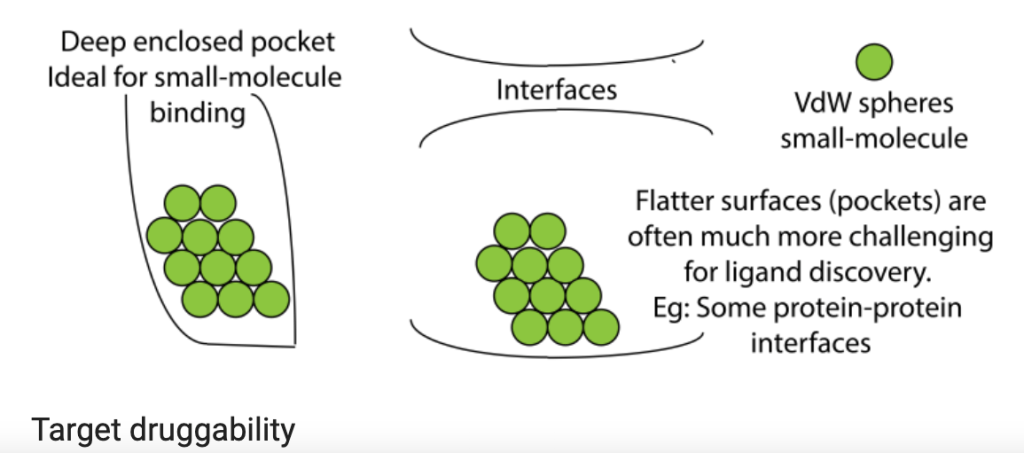
My student’s primary project is to test nanoparticle delivery systems to transport gene therapy to tumors. Many of the genes that drive cancer code for proteins that aren’t easily druggable by small molecules that fit neatly into a unique structural region in the target protein to block its function (e.g. deep enclosed pocket versus flat, relatively uniform interface or surface, as shown in the figure above). But what if we could stop production of cancer-driving proteins at the level of gene expression? This is actually possible in the laboratory setting in a process that exploits messenger RNA, the protein-making instructions that are copied from DNA and used by protein producing cellular machinery (see figure below). The use of small interfering RNA (siRNA) gene therapy, which causes the messenger RNA that encodes the protein’s blueprint to be destroyed, can theoretically stop production of any protein, which would make any target druggable. One of the challenges, however, is delivery of siRNAs to tumors. siRNAs tend to be unstable, so they can be easily destroyed by immune cells or taken up by the liver or kidneys as a part of their normal clearance functions. To overcome those delivery barriers, many biomedical engineers are applying nanotechnology, designing nanoparticles that surround the siRNA molecules. These nanoparticles shield and protect the siRNAs in circulation and can be modified to help homing to the tumor. In collaboration with Dr. Craig Duvall, we are testing nanoparticles delivering siRNA to destroy the blueprint for Rictor, a protein that we believe is essential for tumor cells to grow and prevents them from dying when they’re supposed to. Results so far are promising!

What I hope to give Kalin is a research experience that feeds her passion for science and drug discovery, to foster her natural skills and curiosity, and to keep striving for the goal of bench-to-bedside translational research. What she’s given me is her clinical perspective, something that has enriched my research and inspired me to do more directly translational research with the goal of clinical application. She’s also given me the gift of fearlessness and enthusiasm, which young scientists always possess in abundance and, fortunately, is contagious. The rewards of mentoring the next generation of scientists are many, but the synergy between experience (mentor) and fresh ideas and perspectives (mentee) is perhaps the most valuable.

Team Lab Rats at Nashville Making Strides Against Breast Cancer Event

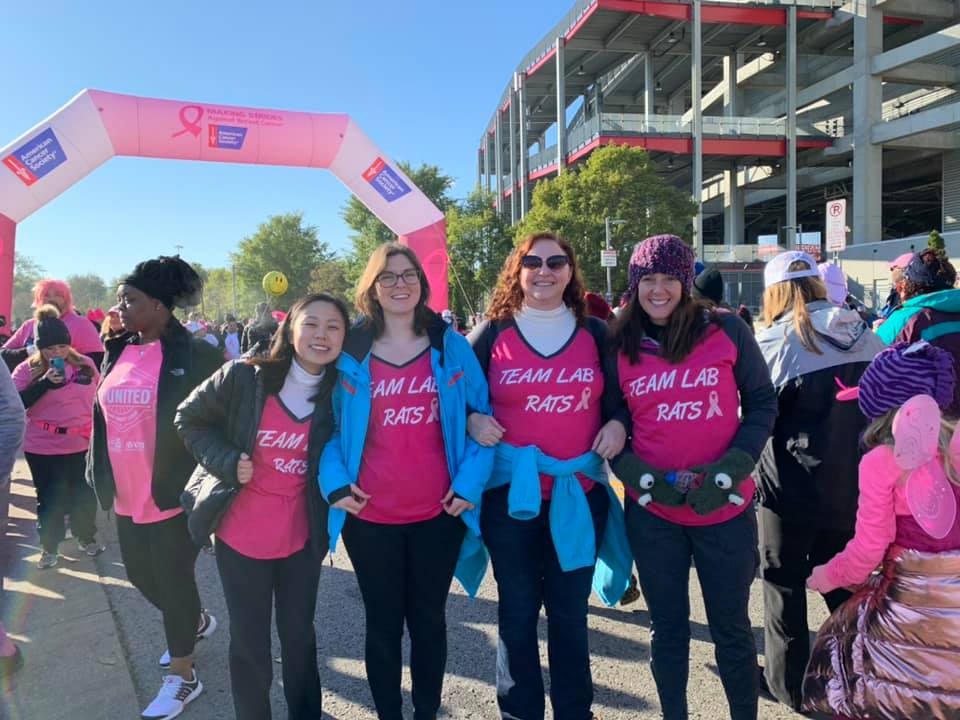
Laura Kim, Kalin Wilson, Dana Brantley-Sieders, Rebecca Cook – Team Lab Rats!

Days like today fill me with so much energy, enthusiasm, and hope.

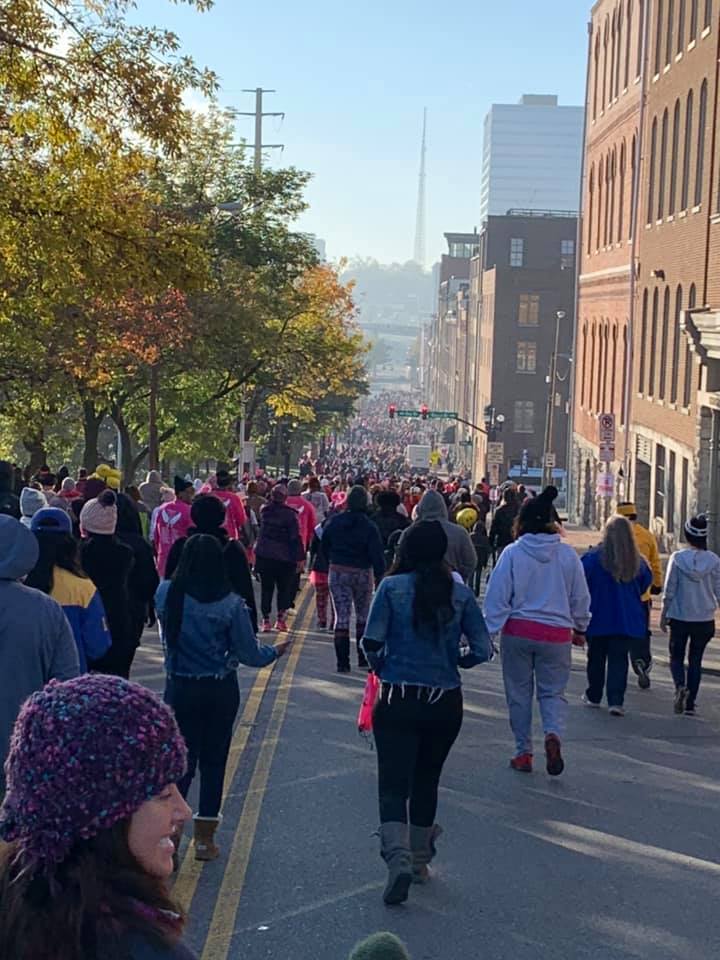
Nissan Stadium and the surrounding area were JAM PACKED with people – women, men, kiddos, cute doggos, survivors and those who love and honor them – gathered together in a unified purpose: to raise awareness and money for breast cancer research, patient assistance, and to keep making strides!

My wonderful friends/colleagues, including graduate student Laura Kim, medical student Kalin Wilson, and fellow investigator and collaborator Rebecca Cook, joined me to form Team Lab Rats. They were with me through my own adventure with breast cancer and are with me in the laboratory as we search for new and better treatments for molecular targets that drive breast cancer growth, survival, and metastatic progression. It’s a beautiful thing. I’m a lucky woman.

Together, we raised $1,500, and I couldn’t be prouder of these amazing women and all of the teams who raised hundreds of thousands of dollars for this cause that is so near and dear to my heart. Nashville, my home city, you make me so proud!

Look at that crowd!
My AMAZING Team honored me at the Avon booth by Kissing Breast Cancer Goodbye!

To everyone in Nashville and around the United States (and the world), thank you for your support. It means more than you know to survivors. Thank you.

Science Break! Breast Anatomy, Structure, and Function

This is the first in a series of posts dedicated to the science of breast cancer, so let’s start from the beginning with normal breast. In order to understand how cancer forms and grows, you first have to understand how non-cancerous cells behave and function. Why? Because fundamentally, cancer is an aberration of normal function. Cancer cells were once normal cells. A series of events that involve mutation in the cell’s DNA, the genetic blueprint that encodes instructions and specific modifications for that cell’s function that lead to changes in (1) the cell’s ability to divide, (2) the cell’s response to normal programmed cell death, (3) the cell’s ability to repair damaged DNA. These events reprogram the cell’s function and cause uncontrolled, abnormal cell growth, and these changes are alterations in the normal cell programs that maintain the balance between new cell growth and old cell death that maintain healthy cell function.

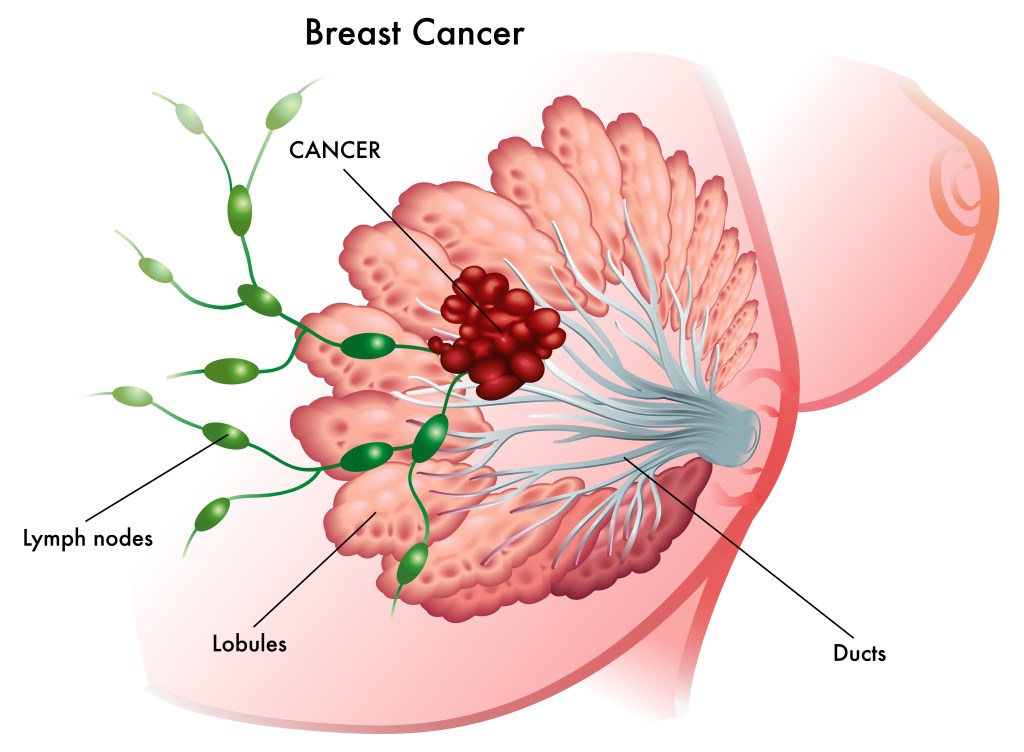
Let’s start with anatomy. Breasts are made up of milk-making (lobules) and shuttling (ducts) glandular epithelial cells anchored by connective tissue and support cells in a sea of squishy fat (adipose tissue). The glandular epithelium goes through a massive growth cycle during pregnancy and becomes a milk factory for nursing young. When the young stop nursing, the factory shuts down, most of the cells die, and the epithelium rests until the next pregnancy. The same cellular programs that control growth and death in these normal cycles become highjacked when a cell begins to transform from normal to cancer. This includes programs regulated by hormones like estrogen and progesterone, as well as cell surface growth factor receptors like HER2, which we will cover in future posts.

Most breast cancers form from ductal epithelial cells, but can form from lobular or other types of cells*. The most important take home message is that breast cancer isn’t a single disease. It is a collection of diseases classified by pathology (how it looks under the microscope) and molecular genetics (which collection of mutations in specific genes contribute to its formation and progression). There are at least five broad subtypes of breast cancer that can be further divided into additional subtypes: (1) Luminal A, which tend to be estrogen and progesterone hormone receptor positive (ER+/PR+) and lack HER2 alteration; (2) Luminal B, which tend to be estrogen receptor positive and can be HER2 positive or negative; (3) HER2-enriched, which tend to be negative for hormone receptors (ER-/PR-) and display amplification (more copies) of the gene encoding HER2 cell surface receptor; and (3) Triple negative, which lack hormone receptors (ER-/PR-) and HER2 amplification (HER2-)**. I’ll cover each of these subtypes in future posts, including the latest research on how they form at the molecular, genetic, and cell biologic level, and current/emerging treatment options.

To wrap things up, I’d like to share with you some of the work I did as a graduate student***, which involved understanding molecular regulation of normal breast epithelial development during puberty. Again, understanding how normal breast epithelium grows and forms as breasts develop is an important first step in understanding how things go wrong in breast cancer. The pictures in (A) show whole-mount preparations of mammary gland (a fancy term for squishing and flattening a small piece of tissue on a slide and staining it to show the epithelium in the sea of fat) of breast epithelium growing to fill the fat of developing breast during puberty. The specialized bulb-like structure (arrow) is called a terminal end bud (TEB). The schematic in (B) shows the structure of cells within the TEB as they grow from the TEB tip out and differentiate into their normal, mature structures in the area behind the TEB. Luminal epithelial cells line the ducts, while myoepithelial cells that surround the lumina structure contain contractile proteins that, like muscle, will eventually squeeze and contract to help milk travel to the nipple. Cap and body cells turn into these cell types when growth stops.

*American Cancer Society; **Susan G. Komen, ***From my graduate thesis

Making Strides Against Breast Cancer

UPDATETeam Lab Rats raised $1,500 for Making Strides! Thank you to everyone who donated, bought my books in October, and for everyone who supported and shared fundraiser deets! I’ll be posting pictures from the event this weekend!

Me The Day Before My Breast Cancer Surgery

I’m thrilled to be a part of the 2019 Making Strides Against Breast Cancer Initiative, sponsored by The American Cancer Society and Avon. American Cancer Society is a great organization, supporting researchers, patients, survivors, and clinicians. I’ve had the great fortune to serve as a peer reviewer for their research grants program, and I’ve got to tell you – there are some AMAZING new investigators across the United States working hard every day to find new treatments, better diagnostics, better interventions, and extending our knowledge of this complex and terrifying collection of diseases.

In addition to research, they fund patient transport to and from treatments, personal assistance to help patients understand their diagnosis and get the help they need, and one-on-one support for breast cancer patients. This is a fantastic organization that I’m proud to support as a researcher, advocate, and survivor.

I’m Team Leader for Team Lab Rats, and we’ve raised over $1,000 so far and growing! I’m also donating 100% of my October book royalties to this Making Strides Fundraiser. Pictures and updates to follow.

If you or someone you love has been diagnosed with cancer, reach out to The American Cancer Society for accurate information, resources, and support. Knowledge is power. You are not alone.

Introduction

I love you with all my boobs. I would say my heart, but my boobs are bigger

Dr. Dana Brantley-Sieders, Ph.D. (photo credit Lillian Boeskool)

I’ve spent twenty years working as a biomedical breast cancer researcher. Then, I was diagnosed with breast cancer. I thought I knew breast cancer before it whacked me upside my left boob and left me bleeding on the curb of uncertainty. I thought I knew cancer. I had a lot to learn. The purpose of this blog is to share my personal adventure with breast cancer, from the laboratory bench to my own bedside, and to provide accessible information about breast cancer biology for non-scientists. I say adventure, because I’d rather think of it as action movie with some really cool side quests instead of another tragedy-to-triumph saga. I’m not big on sagas. I am big on kickass intellectual badassery, pathological nerdiness, and talking about my sweet, sweet rack.

I’ll be posting about breast structure and function, how breast cancers arise from normal breast tissues. Notice I wrote “cancers” instead of “cancer.” Breast cancers are a actually a collection of diseases, and all breast cancers are different. To date, there are at least 5 subtypes, and subtypes within those subtypes.

It’s complicated, which is one reason why we haven’t cured these diseases. Another reason is how tricky and adaptable cancers are by their very nature. We’ll get into all of that in a few posts. In the meantime, let me get into the other purpose of this blog: fighting pseudoscience and scams with peer-reviewed, vetted science.

We live in an age of fake news and pseudoscience, made worse by the pervasive anti-intellectual and anti-science political culture gripping the United States and much of the world. The Internet and social media are plagued by scammers selling “alternative medicine” and woo woo “cures” for cancer. Through TALKING TATAS, I offer accurate, evidence-based science that is accessible to laypersons, including the more than three hundred thousand individuals diagnosed with breast cancer every year*, their caregivers, and their loved ones. Submit questions, ask for follow-up on any and all posts, be a part of the discussion. Knowledge is power, and it can save lives!

Welcome! I’m glad you’re here!